

This is the story of how Manhattan’s most popular flower market on 28th Street came to be and blossomed into the heart of New York City’s floral trade. Read on at manhattanname for the full scoop.
Market Roots
Before diving into the flower market’s origins, it’s worth noting that for Manhattanites, and New Yorkers in general, flowers were always an important part of daily life. A major reason for this was the city’s poor sanitation, which spread a foul stench for nearly three miles. Flowers offered a fragrant escape for locals, who placed them in their homes to mask the pervasive odor. Businesses used the same tactic. Initially, flowers were sold only in pots because there were no special storage conditions. Seasonality also heavily influenced sales.
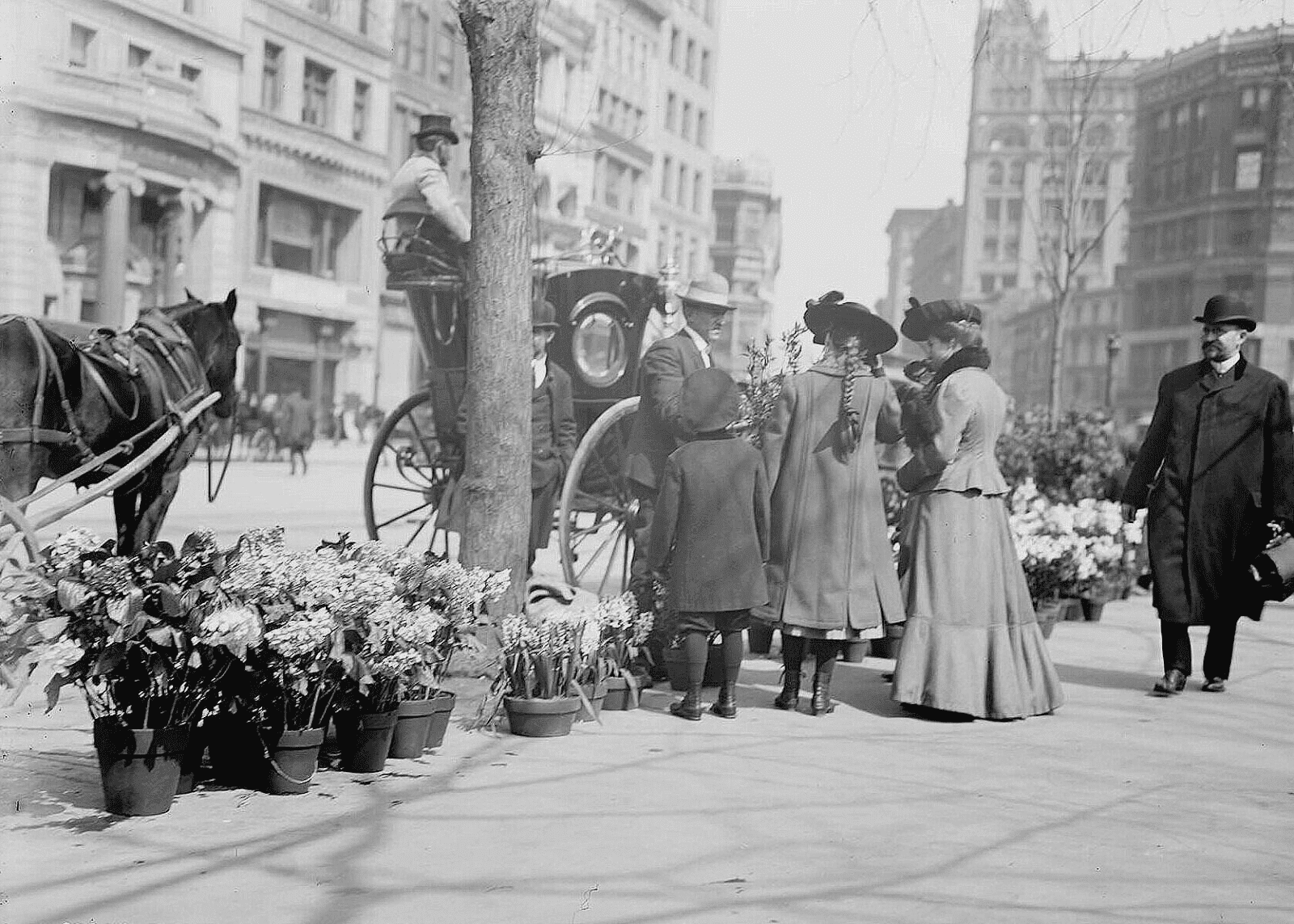
The Manhattan flower market’s story began back in 1850. This was when flower markets started to actively take root. At first, sellers set up shop informally on Canal Street, near 34th Street. After the Civil War, finding a place to sell became trickier, so around 1891, the market moved to a new location: Union Square. Crucially, during this period, a wholesale market emerged. Owners bought large quantities of flowers directly from producers like farmers and greenhouse operators, primarily in New Jersey and New York. Over time, various associations formed, uniting to grow the florist business. Manhattan, and the flower industry as a whole, began to expand significantly. By 1900, New York State boasted 237 greenhouses cultivating flowers, leading to a surge in competition. This made finding a sales spot problematic; owners often went to court over locations, and prices dropped considerably. Roses sold for a dollar a dozen, azaleas started at $3.50 each, and potted Boston ferns went for $1. Most flowers came from local farms on Long Island, rural counties in New York State, and New Jersey. Thanks to the emergence of florist associations and clubs, it became possible to order larger batches of flowers from distant states like Massachusetts, Illinois, Florida, Kentucky, and Kansas. The flower business continued to thrive. It’s also worth noting that various shows organized in the 1800s and 1900s further popularized the industry.
The Move to 28th Street
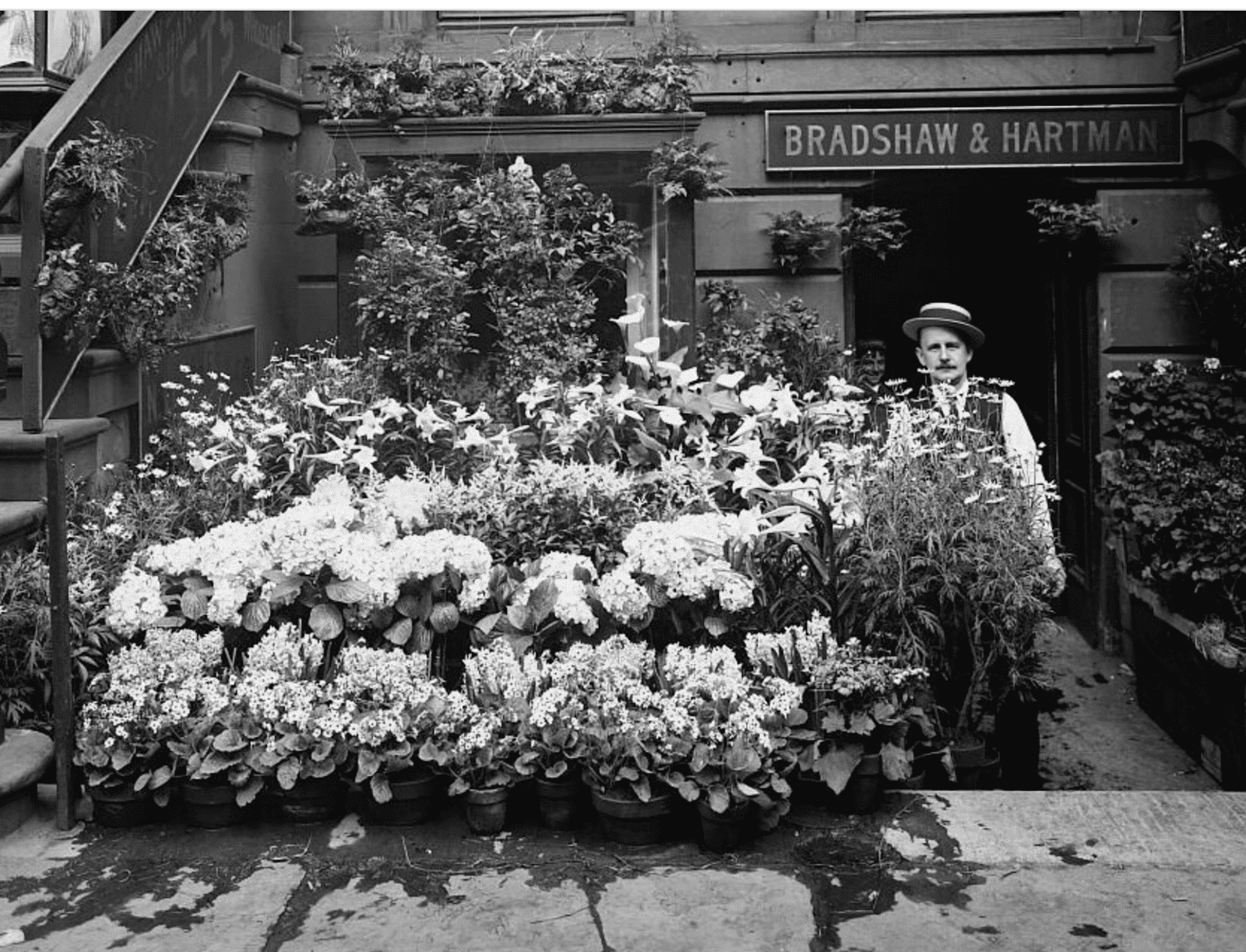
In the late 1890s, vendors gradually began relocating to 28th Street. This shift was driven by many wholesalers acquiring warehouses on Sixth Avenue, between 26th and 29th Streets. This move proved incredibly strategic. The area was booming with theaters, brothels, and restaurants nearby. Expensive homes were also being built for affluent residents. Given all this activity, flowers were in high demand. A 1957 U.S. Department of Agriculture report stated that New York City’s flower market was the largest wholesale flower market in the United States. The availability of flowers, especially cut ones, increased significantly with the advent of greenhouses and the active use of ice for preservation. Seasonal flowers were no longer limited to their season, as ice allowed for longer storage of all types of plants.
This iconic flower market continues to exist in modern Manhattan, though it’s considerably smaller. The market now consists of several shops. Here, you can find tropical plants, various other types of greenery, potted trees, as well as orchids, cacti, and much more.