

This article dives into the story of the famous High Line park, an American linear park built on a former railway line. It boasts not only a fascinating history and appearance but also unique landscape design, local landmarks, and stunning city views. Read on at manhattanname to learn more about its creation.
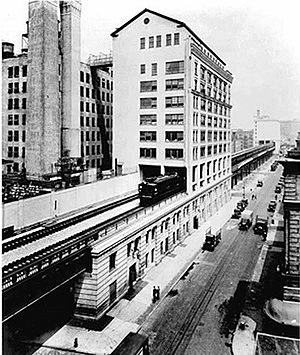
What Came Before the Park?
The High Line is an American linear park built on an elevated railway spur, stretching 1.45 miles (2.33 km). It’s located in Manhattan. It begins in the Meatpacking District, starting at Gansevoort Street, runs three blocks below 14th Street, then continues through Chelsea to the northern edge of the West Side Yard at 34th Street.
Back in 1847, with the city’s permission, a decision was made to build railway tracks along Tenth and Eleventh Avenues. Freight trains soon began operating on this route. However, this railway line became notorious for accidents. Over the years, around five hundred people were killed and fifteen hundred injured. This led to a decision to make changes by creating an elevated railway viaduct called the “High Line” to reduce accidents.
The plans also included the construction of the St. John’s Freight Terminal on Spring Street. The elevated structure opened on June 29, 1934, and ran through the center of blocks. The first train on the High Line viaduct, part of the New York Central Railroad’s West Side Line, ran in 1933. These trains often passed directly through buildings, easing street-level traffic congestion. They primarily transported raw materials and industrial goods.
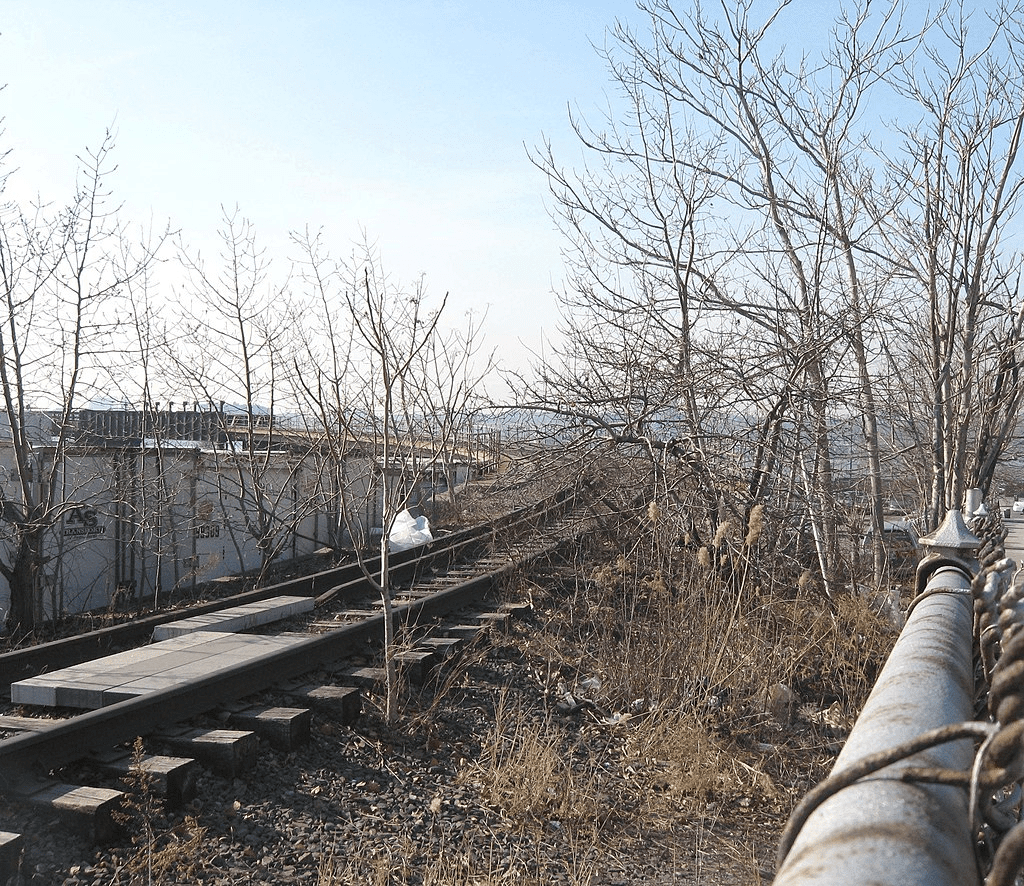
Viaduct Closure and Park Planning
By 1978, the High Line viaduct saw infrequent use, with freight cars passing only twice a week. It was closed in 1980. This closure was necessitated by the construction of the Javits Center at 34th Street, which required rebuilding a curve at 35th Street. The last train on the viaduct was a three-car consist carrying frozen turkeys. The tracks leading to the High Line were reconnected in 1981. However, with no more customers on the route, the turn at 34th Street was never completed, and the viaduct was no longer used for its original purpose.
As the railway fell into disuse, it soon became overgrown, and demolition was considered. In 1992, the Interstate Commerce Commission approved demolition plans, but the process was delayed by disputes between various city government agencies and railway companies. However, the situation took a positive turn when the non-profit organization “Friends of the High Line” opposed the demolition. They proposed transforming the viaduct into an open public space, a green zone, or an elevated park. This concept wasn’t new; similar projects had been implemented in various countries, including Germany.
Deciding to act, various initiatives were launched to raise funds and organize design competitions for the new project. Proposals included a sculpture garden, an elongated swimming pool, and a linear amusement park. In 2003, ownership of the viaduct was transferred for park development, and plans for the High Line park were announced. The following year, the New York City government allocated $50 million for construction. Fundraising efforts ultimately gathered over $150 million. On June 13, 2005, the Surface Transportation Board issued a certificate of interim trail use, allowing the city to remove most of the line from the national rail system.
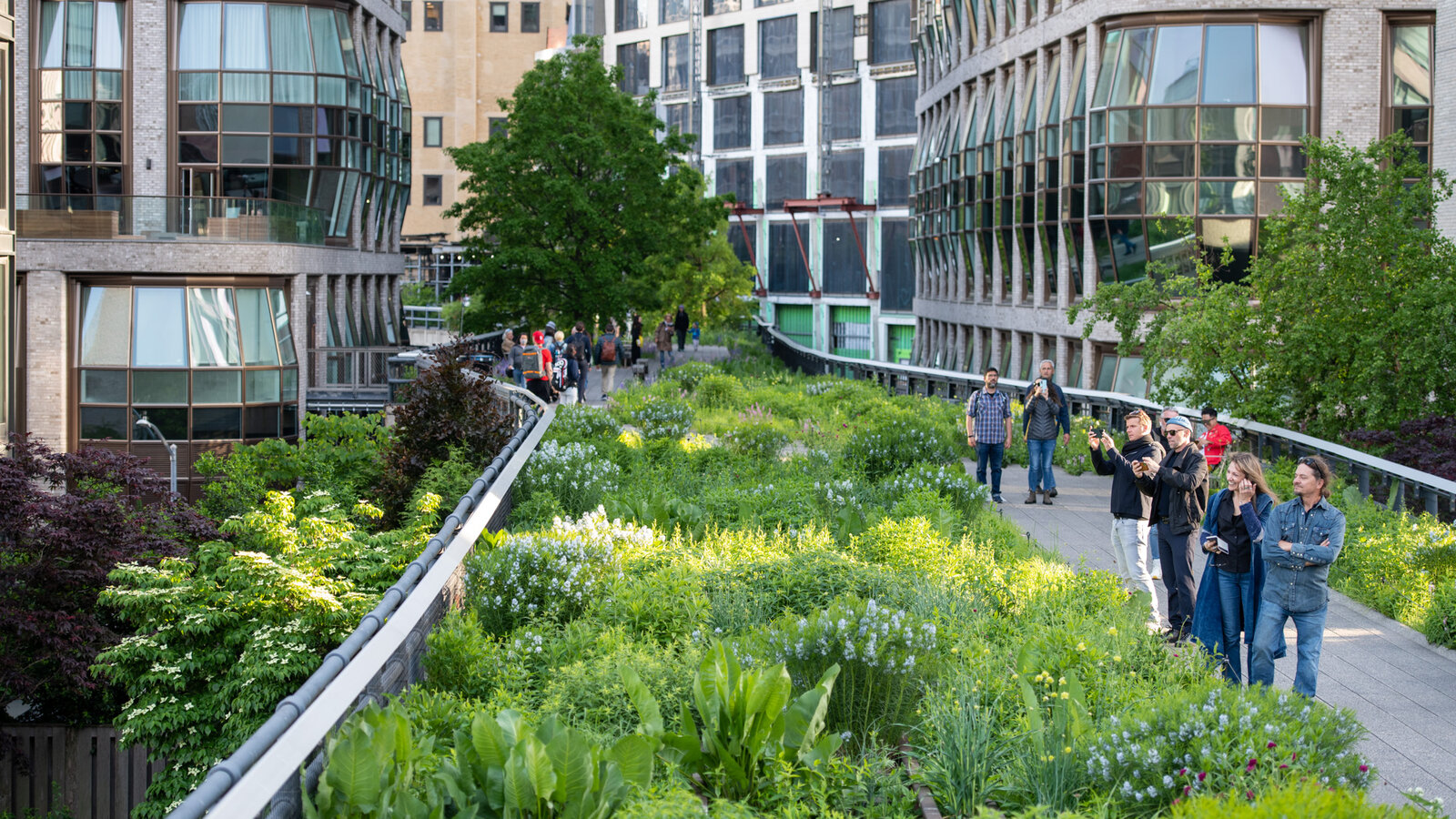
About the Park
The park was designed by the New York-based landscape architecture firm Field Operations. It officially opened in 2009. The High Line stretches 1.45 miles (2.33 km) from Gansevoort Street to 34th Street. Its landscape design was crafted by Dutch landscape architect Piet Oudolf. He incorporated meadow-like plantings such as bunch grasses, coneflowers, liatris, as well as thickets of sumac, smokebush, and many others. Before its transformation, the viaduct hosted 161 plant species. The current park features around 400 species, including grasses and trees. Each species was selected for its appearance and year-round hardiness. A team of 10 gardeners maintains the park. Local fauna includes 33 native bee species and butterflies. Beyond flora and fauna, the park also features various attractions. The park is open daily from 7:00 AM to 10:00 PM in the warmer months and until 8:00 PM in winter.