

Everyone is invited to join an exciting expedition through the chronicles of the Central Park Zoo in Manhattan, starting from its unique collection of abandoned animals and culminating in its establishment as one of the most notorious animal sanctuaries on Earth. Read on to learn more about the history and peculiarities of the zoo at Manhattanname.
In one of the episodes of “The Bowery Boys: New York City History” podcast, this zoo was mistakenly mentioned in a well-known political animated film. According to the information provided in the aforementioned podcast, this caricature used the Central Park Zoo as a political metaphor and supposedly depicted Ulysses S. Grant in the form of a donkey. However, the focus of the caricature was not Grant himself but his alleged “Caesarism.” At that time, Grant was running for a third term as president, which was allowed by the constitution but considered unconventional.
Modern Symbolism of Zoo Animals
In fact, the donkey in political caricature represents the “New York Herald” – a scandalous newspaper that published a report on fraud in Central Park and spread the term “caesarism.” The caricature depicts animals from the zoo, including a mythical unicorn, as well as an elephant representing the Republican bulletin, which is frightened by the grand prospects of the “Herald” regarding Grant. Thus, the elephant became associated with the Republican Party, symbolizing it.
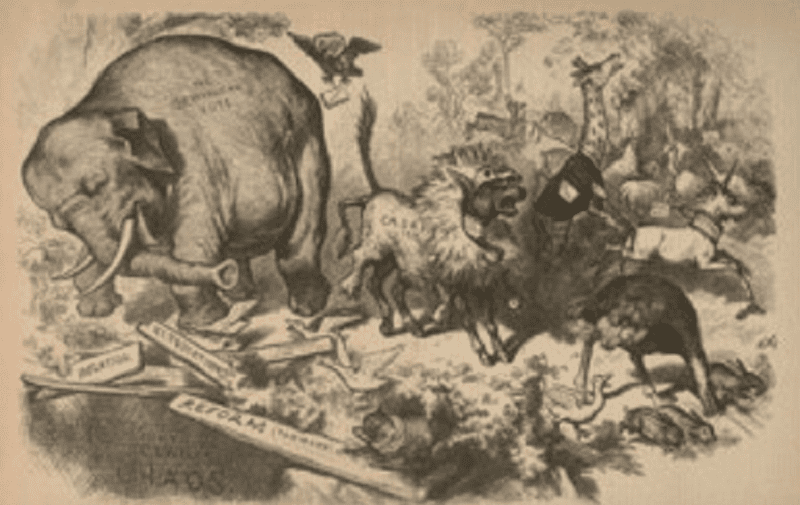
Photo source: https://www.boweryboyshistory.com/
Moving on to Animal Farm, an early postcard shows how the assortment came about by chance. Before the Arsenal became the headquarters of the zoo, it functioned as a temporary location for the Museum of Natural History and as a workplace for paleontologists and their prehistoric fossils.
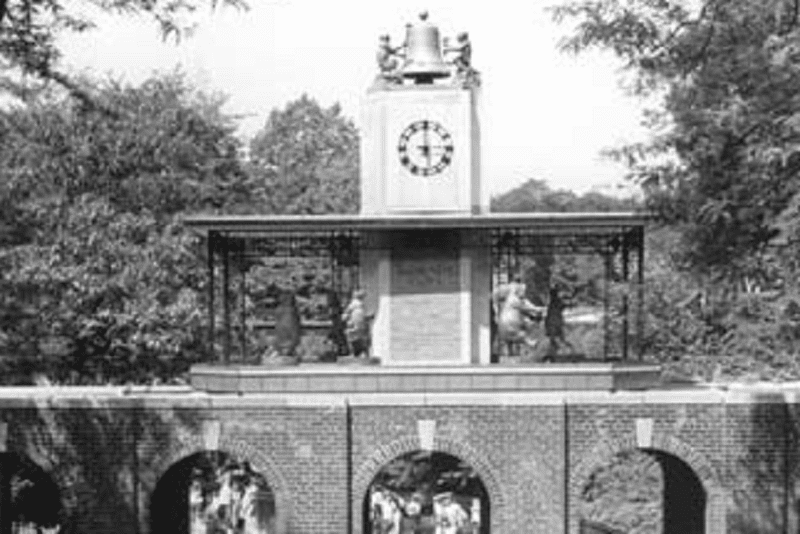
Source of the photo: https://www.boweryboyshistory.com/
As part of the revitalization efforts, the Delacorte Clock, located in the Children’s Zoo of Manhattan, was restored in the 1980s. This object now resembles an exquisite European clock design. The clock was gifted by George Delacorte, the founder of the publishing company “Dell,” who also arranged Central Park by installing a theater and statues. These objects depict Alice from “Wonderland.”
The clock, which is over four decades old, chimes with lively melodies every hour and displays a procession of playing animals, which can even be heard from Fifth Avenue if one listens closely. The sculptures of the fountain, “Dancing Goat” and “Honey Bear”, standing nearby, may resemble a modern style, but they date back to the 1830s and once adorned a luxurious small cafe at the zoo.
Famous residents of the Manhattan Zoo
In the early 1970s, Patty Cake and her mother gained immense popularity at the New York zoo. Patty Cake was the first gorilla born in the zoo and her name was chosen through a newspaper contest, making her very popular. Unlike most gorilla infants, she was raised by both parents, Lulu and Congo.
Unfortunately, she suffered a broken arm when her father accidentally fell on her, necessitating her transfer to the Bronx Zoo. The custody battle between the two zoos even garnered coverage in Time magazine. Patty Cake, the contemporary gorilla, is now a permanent resident of the Bronx Zoo and a proud mother of nine offspring, including exceptional twins, N’goma and Tambo.
The “Patty Cake Fund” is a charitable organization aimed at combating gorilla poaching in Africa and Patty Cake, the renowned gorilla from Central Park Zoo, essentially supports the initiative. Gus, a former polar bear who used to exhibit unstable behavior, was diagnosed with “frustration syndrome” by a zootherapist. His story received widespread coverage in Newsday and CNN, even inspiring a theatrical production. His living environment was improved with better water circulation and now he happily resides with his two companions, Ida and Lily.
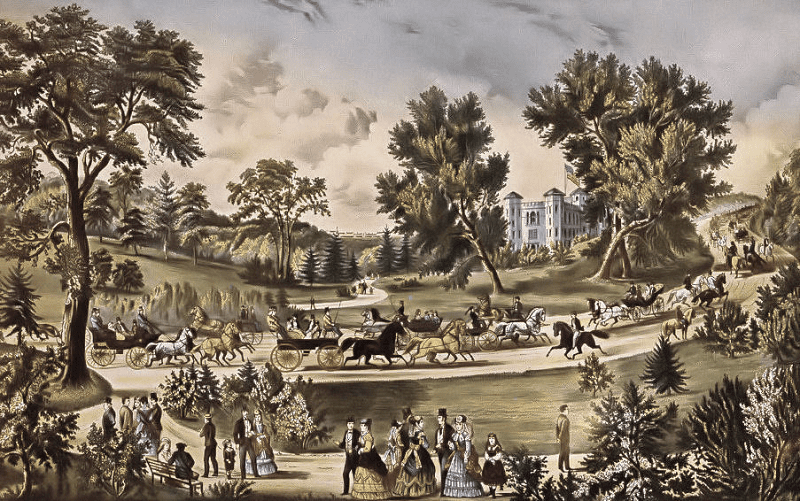
Photo source: https://www.boweryboyshistory.com/
Finally, to uncover further chronicles from the history of the Central Park Zoo in New York and the borough of Manhattan, one need only cast their gaze upon a painting depicting the mid-19th century. The painting captures Central Park in its more untamed era. Within this artwork, the structure of the Arsenal is displayed, resembling a fortress, before it was transformed into a sanctuary for the animal kingdom.