

This article explores one of New York City’s most renowned parks, celebrated for its unique location, rich history, and significant historical and cultural value. Learn more about Riverside Park on manhattanname.com.
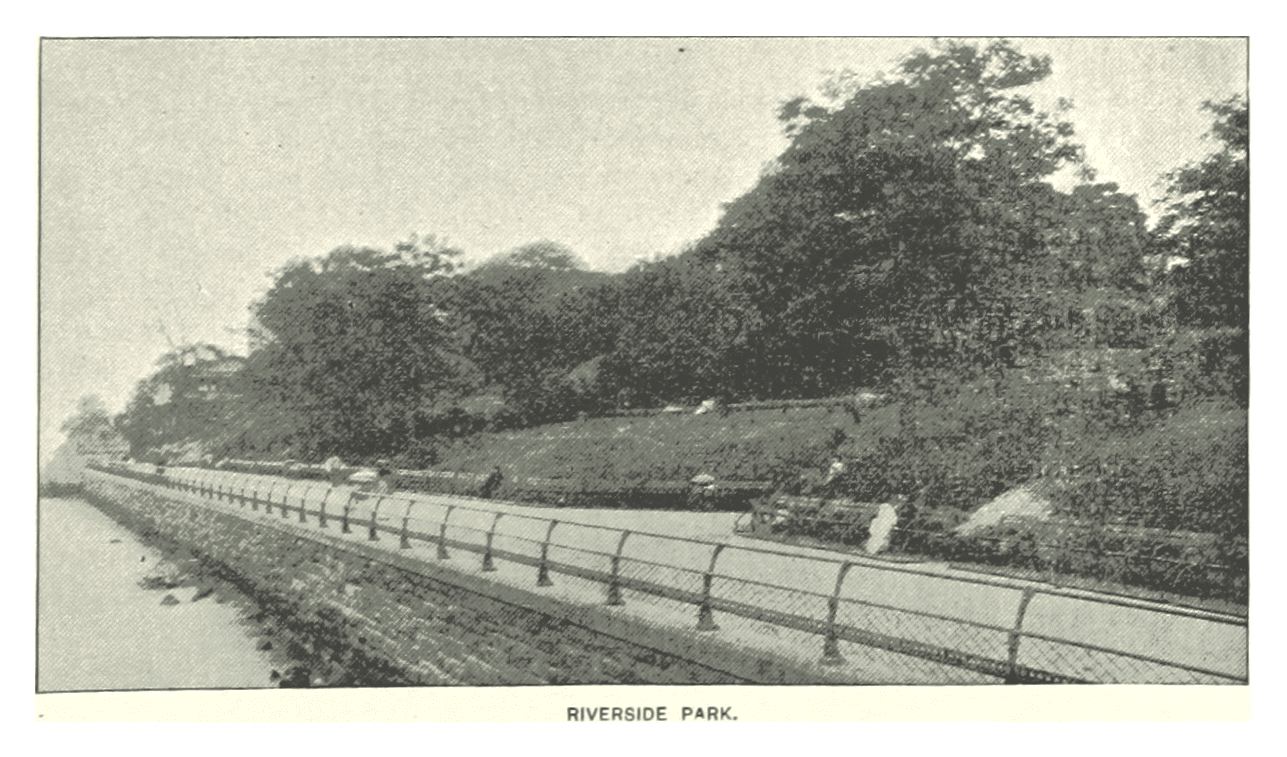
Founding
Riverside Park is a scenic, historic park stretching along the Hudson River on Manhattan’s West Side. It spans 4 miles (6.4 km) in length and varies from 100 to 500 feet (30 to 152 m) in width.
The land that now constitutes Riverside Park and its surroundings was originally home to the Lenape tribe. They used these grounds for fishing, hunting, and agriculture. European settlers later populated the area, establishing farms and agricultural plots, which led to the growth of settlements. In 1846, the Hudson River Railroad was constructed, significantly enhancing transportation infrastructure between New York City and Albany. Following the creation of Central Park in 1857, the borough, particularly the eastern part of Manhattan, experienced rapid development.
The idea to create a park on the Hudson River’s banks emerged in 1865, proposed by Central Park Commissioner William R. Martin. He argued for creating a pleasant recreational area by the water, especially since Manhattan’s only other significant waterside park at the time was in its southern part. A bill for the park was passed in 1867, and in 1872, the first 119 acres (48 hectares) of land were acquired for Riverside Park’s construction.
Construction
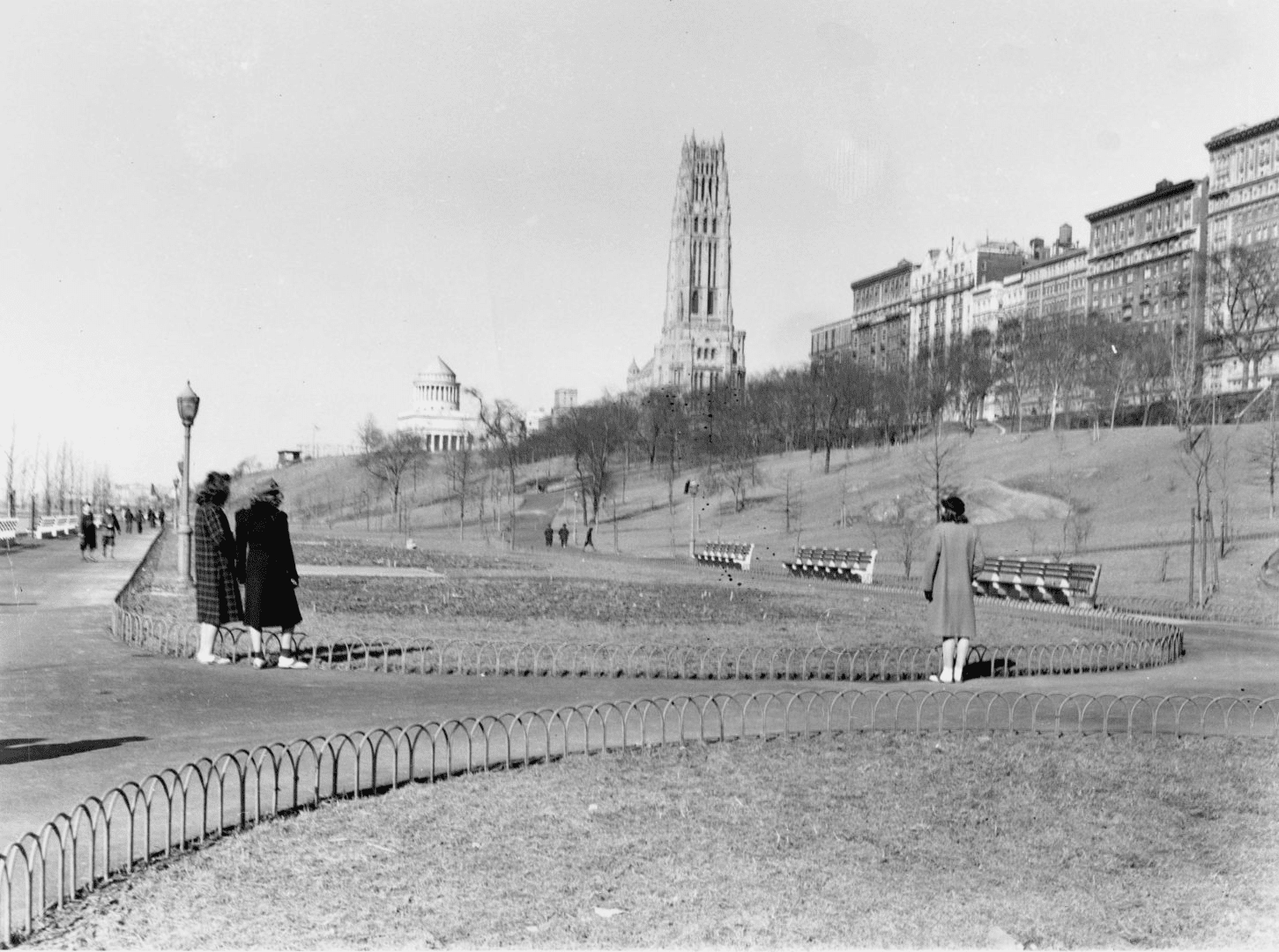
Construction initially focused on “Riverside Avenue” (the future “Riverside Drive”). The original plan called for a straight avenue, but the area’s challenging terrain forced a design modification. The revised plans included a gently curving main thoroughfare, viaducts for traffic and pedestrians at 79th and 96th Streets, and carriage drives. Construction began in 1874. After the lead designer, Frederick Law Olmsted, was removed from the project, individuals such as Samuel Bowne Parsons Jr., Calvert Vaux, and Julius Munckwitz took charge. They were instrumental in adapting the park’s design to the Hudson River Valley landscape. “Riverside Avenue” officially opened to the public in 1880.
Further Development
It’s worth noting that while the park attracted a fair number of visitors, the adjacent Upper West Side saw little development for some time. Land prices were high, and the wealthy generally preferred the Upper East Side. However, small-scale construction eventually began to appear in the area.
The 20th century brought active construction of monuments, including the Soldiers’ and Sailors’ Monument and Grant’s Tomb (the common name for the tomb of President Ulysses S. Grant). Additionally, a boathouse and stadium for Columbia University were built. These additions transformed the park from a purely natural retreat into a historical landmark. Starting in 1898, Riverside expanded further with the construction of an arched viaduct extending to 135th Street. In the early 1900s, the park was extended again, reaching 158th Street. It was during this period that “Riverside Avenue” was renamed “Riverside Drive.”
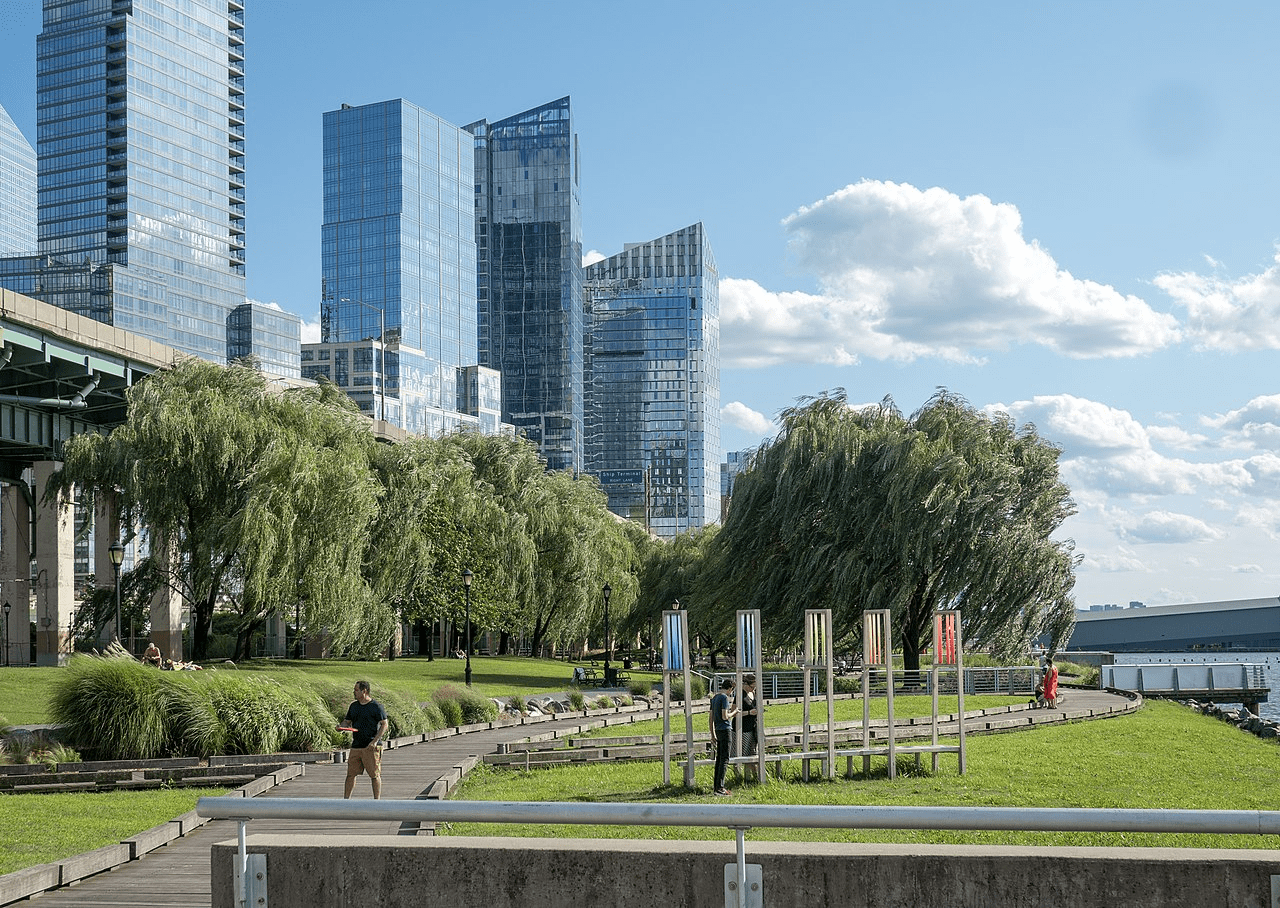
The 1920s saw further reconstruction and expansion. Sports facilities, including a soccer field and a swimming pool, were added, along with a boat basin and marina near the water. However, from the 1950s to the 1970s, Riverside Park began to decline due to underfunding and other issues. Thanks to the efforts of community organizations, the park experienced a revival from the 1980s through the 2000s. During this time, it was listed on the National Register of Historic Places and designated a New York City scenic landmark. Today, the park remains vital to city residents but faces ongoing challenges. These include a pressing need for infrastructure renovation, issues with drainage systems, and lighting problems. Despite these concerns, active efforts are planned for the park’s improvement and restoration.