

New York City itself and the Borough of Manhattan are surrounded by a large number of bodies of water. They include all kinds of rivers, straits and lakes. They serve as one of the means of economic development since the possibility of using boats brings good results in transporting the products of various companies. For residents, the equipped shoreline is a favorite recreational area. Here they get away from routine life and take in a breath of fresh air. Most such locations contain a large number of attractions and entertainment centers. But what is particularly striking is the nature, which is very different from the urban character of Manhattan. The shoreline is lined with trees and other vegetation, which fills the gray everyday life with new colors. One such is the Harlem River that separates the Borough. Learn more at manhattanname.
Significance of the body of water
Harlem River is a 13-kilometer-long strait separating Manhattan and the Bronx. It is part of the Hudson Estuary system and appears as a relatively narrow branch. The water body plays an integral role and is one of the main connecting links between Manhattan and the Bronx. The infrastructure of the strait areas is provided for the possibility of navigation. Every day lots of boats, barges and all kinds of other water transport run here. The total number of bridges connecting the opposite banks is 15 structures of various designs and shapes. They provide not only a connection between Manhattan and other parts of the city, but they are also aesthetically appealing and add to the flavor of the city. All vessels with a height of no more than 16.8 meters of air draft are allowed to navigate this body of water, but if the vessel needs 1.5 meters of clearance, it is required to have the Spuyten Duyvil bridge swung open. Highways are along the right side of the Harlem River, and trains pass by on the left side of the strait.
How the strait turned into a modern place for recreation and sports
The history of the first settlements is closely related to the availability of soils near the strait, using which it was possible to obtain a good harvest. Since the discovery of America, it began to be populated by Europeans by rapid leaps and bounds. A great number of farmers from France, Denmark, Germany and Sweden settled on its shores. The Harlem River, located right there, contributed to profitable farming. But a few centuries later, life in these lands started developing exponentially. New structures were built, inimitable skyscrapers were raised and advanced projects were designed. So the farmers were forced to settle away from the urbanized world.
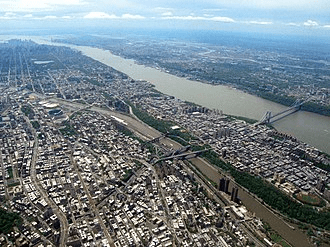
The authorities decided in 1991 to create a project to build a park on the shore of the strait. It was also planned to build a bicycle path to run around the body of water. Even though almost the entire shoreline is built up with various constructions, they were able to allocate a particular area for the park. In today’s world, the park is one of the favorite green spots for locals. They come here with their children, friends, and loved ones. Here you can picnic, fill with new life energy, and find a favorite place to meditate. Historical sites have also been preserved in the park, introducing visitors to the culture of the people who lived in the area many years ago. The location is appealing. For lovers of outdoor activities, in particular, there are many opportunities for water sports. Every year rowing competitions are held here, plus for some time, there were a number of various clubs whose members practiced boating along the strait. Today’s prominent sports organizations housed on the Harlem River are the Peter Jay Sharp Boathouse and Harlem River Community Rowing.