

Located at the southern tip of Manhattan, one of New York City’s five boroughs, Bowling Green Park exudes a tranquil ambiance amid the bustling urban landscape of the metropolis. While its serene exterior, complete with a charming fountain and vibrant floral displays, might be deceiving, this park holds a profound place in the nation’s historical chronicles.
During the colonial era, this sacred ground served as a gathering place for community activists. The area that is now Bowling Green Park was a meeting spot for disgruntled colonists to protest and deliver passionate speeches against British rule on American soil.
Interestingly, this small, oval-shaped park has stood the test of time, making it one of the oldest landmarks in New York City. Below are some historical highlights of Bowling Green Park at the edge of Manhattan, each period uniquely significant in its own right. More on manhattanname.com.
Roots in New Amsterdam
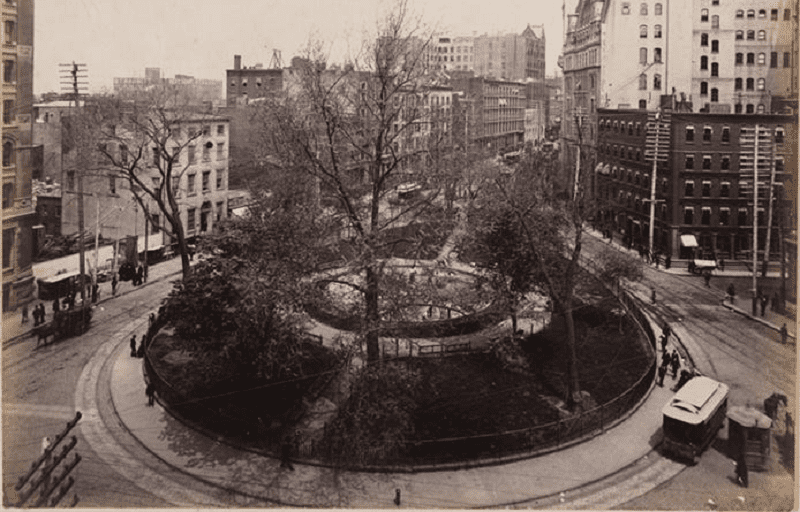
Bowling Green Park, situated near Fort Amsterdam in modern-day New York City, boasts a rich history dating back to the New Amsterdam era. In 1658, the first public well was established on this site, becoming a vital source of drinking water for the city’s residents until 1677.
Throughout the 18th century, the area functioned as a “parade ground” before evolving into an English-style park, managed by three local landowners around the 1730s. The park quickly became a symbol of luxury and social status, featuring lawn bowling, which required the constant grazing of sheep to maintain the quality of the grass.
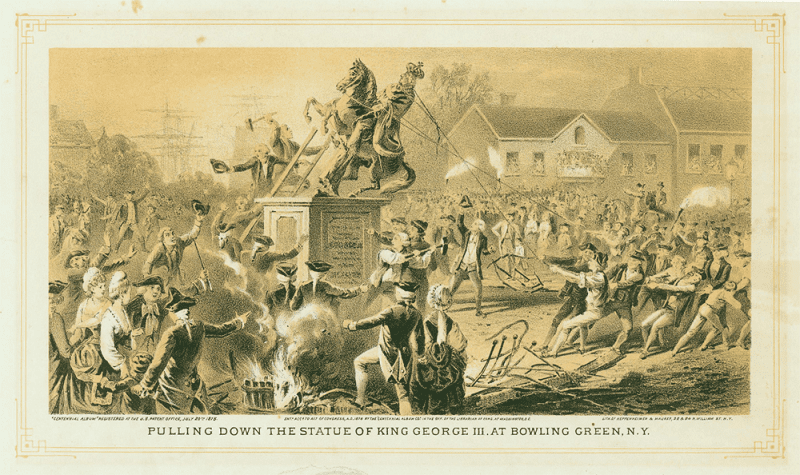
In 1770, fervent supporters of the British crown erected an imposing equestrian statue in honor of King George III, which proudly stood at the park’s center. However, just six years later, following the impassioned reading of the Declaration of Independence by George Washington, New Yorkers violently tore down the statue. Fragments of this historic monument remain preserved in the city today, serving as tangible reminders of a pivotal moment in American history.
The Toppling of King George III’s Statue
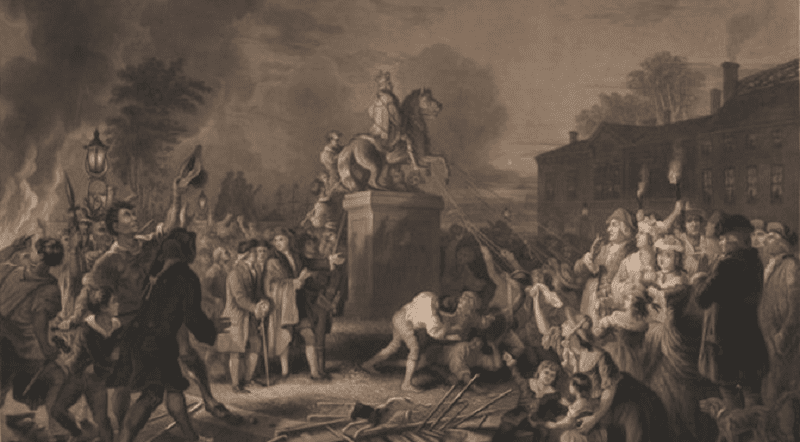
Bowling Green, with its storied history, was once home to a statue of King George III. The monument symbolized the oppressive power of British rule over the American colonies. In July 1776, George Washington passionately read the newly drafted Declaration of Independence to his troops in City Hall Park, igniting an uncontrollable fury among his audience.
This fiery proclamation drove them to Bowling Green, where the statue was violently dismantled. Fragments of the original document have been preserved and are safeguarded in the Library of Congress, forever memorializing the unyielding spirit of that revolutionary era.
The dramatic event marked a turning point in American history, as Bowling Green Park became the site of a fervent act of defiance. The soldiers intended to repurpose the statue’s fragments into ammunition against their oppressors, although only a small portion was successfully used for this purpose.
Within a day, British loyalists secretly decapitated the statue and smuggled the head back to England. The current whereabouts of the missing head remain shrouded in mystery, leaving historians and archaeologists to ponder its fate.
Impact on Manhattan and New York City
Starting in the 1820s, Bowling Green Park became a hub of activity, influencing both transportation and recreation in New York City. It was home to the first velodrome, providing a space for early bicycle iterations. Enthralled by this novel form of transportation, Manhattan residents eagerly rode along the park’s pathways.
The park also played a key role during the American Revolution, hosting Continental Army parades and witnessing pivotal events such as the “Battle of Golden Hill” in 1770. Recognizing the site’s historical significance, a comprehensive renovation was undertaken in 2016, costing over $1.5 million, to restore its historic attributes and enhance accessibility.
During the brief period when New York City served as the nation’s capital (1785–1790), George Washington, the first President of the United States, lived in two different residences. The first, located on Cherry Street, offered stunning views of the East River. Later, Washington moved to a residence on Broadway 39–41, adjacent to Bowling Green Park, before the capital relocated to Philadelphia in 1790.
Bowling Green Park: A Bustling Hub of Manhattan
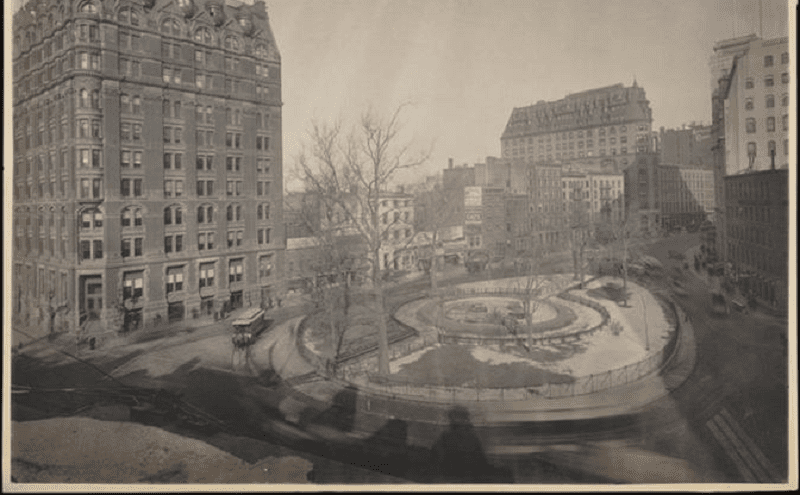
What began as a modest gathering place for activists evolved into a lively hub, serving as a terminus for buses and omnibuses and enlivening the street life along Broadway. Nearby Castle Garden, initially an entertainment venue and later an immigration station, contributed to the vibrant activity and dynamism of the area.
The park itself underwent a meticulous renovation in the 1970s, breathing new life into the historic space while preserving its charm. Remarkably, the original 1773 fence still stands today as a silent witness to centuries of human history, a testament to the enduring legacy of Bowling Green.