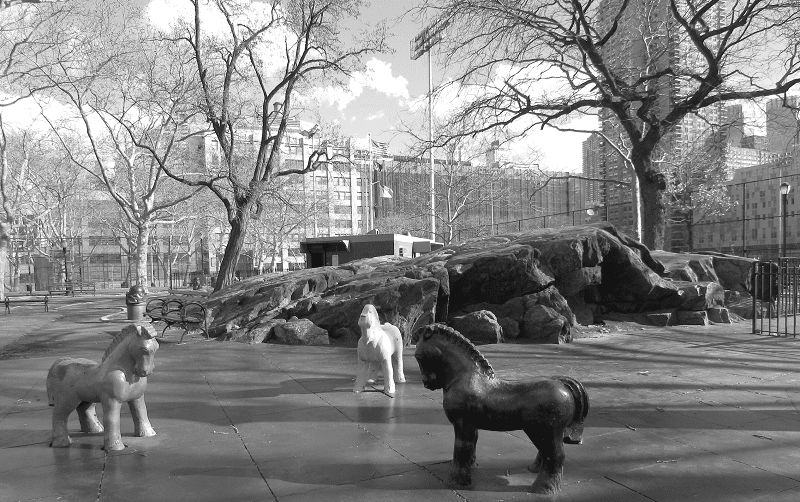
Nestled in the bustling Hell’s Kitchen neighborhood, between West 52nd and West 54th Streets, lies the enigmatic DeWitt Clinton Park—a place where visitors embark on a journey through time. This journey seamlessly transports guests centuries and even millions of years into the past, immersing them in a historical narrative. Read more on manhattanname.
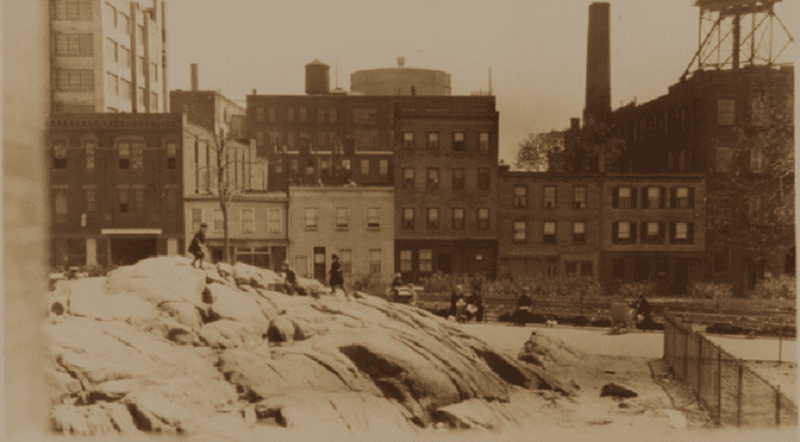
The park’s crown jewel is its striking rock formation majestically located west of the sports field. Known as the “exotic terrain,” this geological wonder stands as evidence of the forces of nature that have shaped our planet. Formed by the ancient convergence of two tectonic plates, this rock formation radiates an air of mystery and intrigue, unmatched in its composition and allure.
A Treasure of Historical Significance
The centerpiece of DeWitt Clinton Park holds an invaluable history spanning an astonishing 450 million years. This geological marvel has stood resilient against the relentless march of time, surviving natural attempts to erase its existence. It stands tall as a steadfast testament to the enduring strength and beauty of nature.
Early Memories of the Park Date Back 200 Years
DeWitt Clinton Park is a unique testimony to the passage of time, with roots tracing back two centuries. The land now home to the park once belonged to the esteemed Stryker and Hopper families, who tended to it over 200 years ago.
The grand residence of General Garrit Hopper Stryker, built in 1752, was an architectural gem. Although it fell into disrepair in 1895, followed by the Mott family farmhouse in 1896, these families left an indelible mark on the land and the park’s future. As New York City progressed, the historical land, once known as “Stryker’s Lane,” was designated for redevelopment. By 1902, the remaining structures were demolished to pave the way for what would become the modern DeWitt Clinton Park.
In 1903, a symbolic tent was erected on the cleared land, signaling the park’s rebirth. Over the ensuing years, the area underwent extensive transformations. The rolling terrain was leveled—a significant undertaking requiring investments of approximately $200,000, according to historical records. Alongside these monumental changes, the DeWitt Clinton High School, a respected Manhattan educational institution, began enrolling students in 1906. This strategic location fostered a symbiotic relationship between education and recreation.
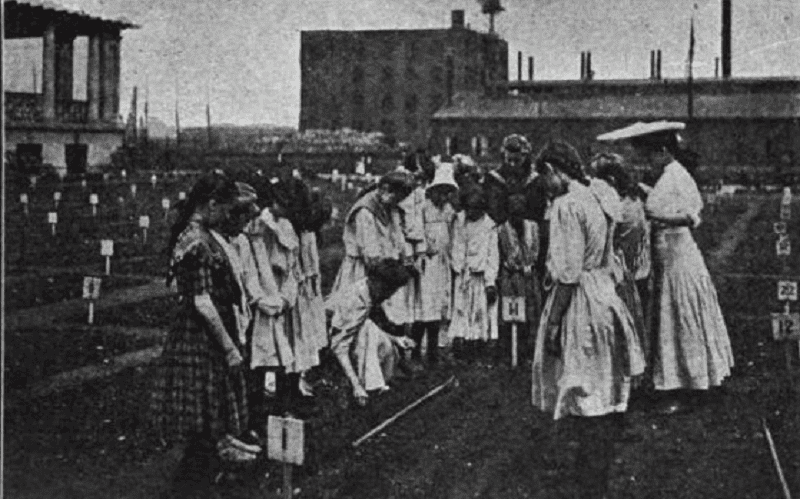
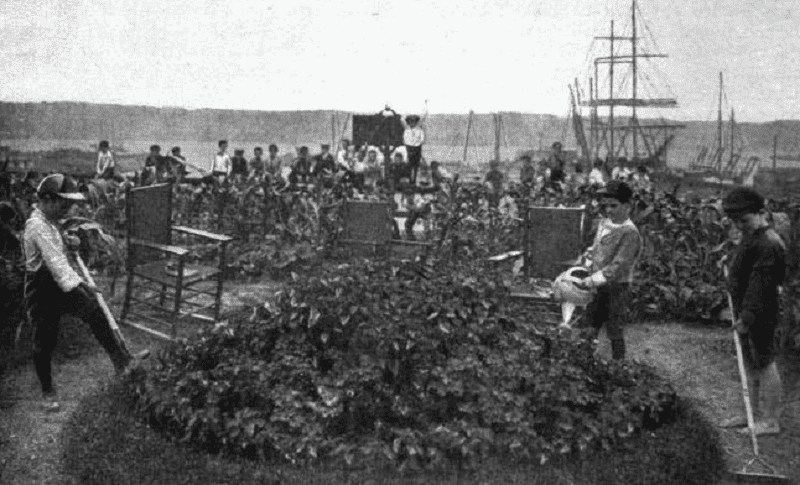
Graceful paths wound through the park, adorned with viewpoints offering breathtaking vistas of the majestic Hudson River. Among the park’s remarkable features was a children’s farm garden—the first of its kind in Manhattan and New York City. From 1902 to 1932, this agricultural haven flourished with 356 plots, each lovingly tended by “little farmers.”
The park’s physical boundaries evolved over time. In 1932, significant changes occurred when 250 feet of the park’s western section were repurposed for constructing the West Side Elevated Highway. The removed soil was transported to Central Park to fill the Lower Reservoir, paving the way for the iconic Great Lawn. While this necessary relocation altered the park’s footprint, it also contributed to the growth and enhancement of Central Park, Manhattan’s cherished green oasis.
The Touching Memorial of World War I
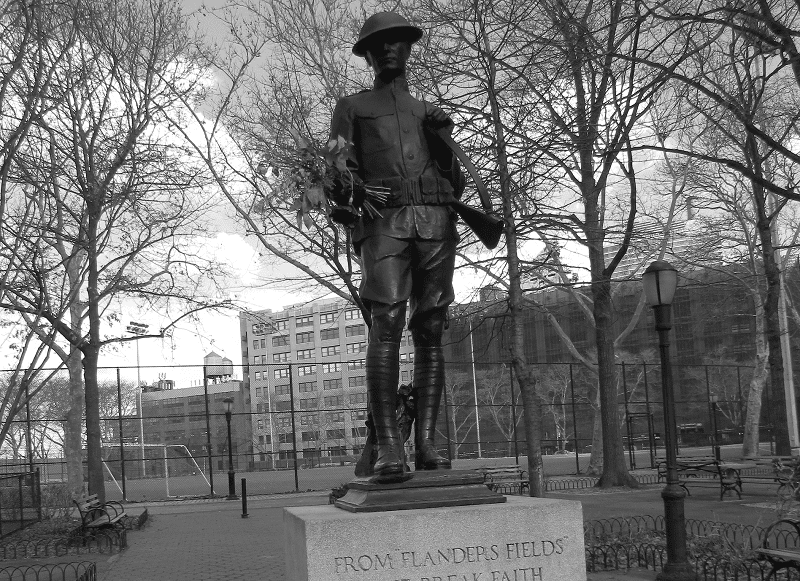
A poignant addition to the park’s legacy is the Flanders Field Memorial, an evocative sculpture unveiled in 1930. Created by Bert Johnson, the memorial features a moving figure serving as a solemn reminder of the sacrifices made during World War I. A similar statue by Johnson was installed in a park in Woodside, emphasizing the profound impact of 20th-century conflicts.
At the eastern end of DeWitt Clinton Park, visitors encounter a powerful memorial to World War I. This solemn statue, installed in 1930, depicts a lone youth with a rifle slung over his shoulder. Initially, the memorial’s gesture of extending a handful of poppies carried a distinct meaning.
The connection between poppies and remembrance traces back to the battlefields of Ypres in Flanders during World War I. Amid the war-torn landscape, poppies flourished, becoming a symbol of fallen soldiers immortalized in Lieutenant Colonel John McCrae’s poignant poem In Flanders Fields. The poem’s famous lines, “If ye break faith with us who die, we shall not sleep, though poppies grow in Flanders Fields,” underscore the profound significance of the poppy.
Sculptor Bert Johnson, renowned for his statues of American soldiers nationwide, began work on the World War I memorial in DeWitt Clinton Park. Tragically, Johnson passed away in 1927 before completing the project. His devoted widow ensured the statue’s completion, creating a lasting tribute to the fallen. Finally, in autumn 1929, the memorial was installed in the park, continuing to honor the sacrifices of those who served.
Modern-Day DeWitt Clinton Park
DeWitt Clinton Park, situated in Hell’s Kitchen, holds a significant place in history and has undergone various transformations over time. A notable change occurred in 1998 with the creation of a spacious park along the Hudson River. Spanning 550 acres along Twelfth Avenue, this modern addition expanded recreational opportunities while preserving historical roots.
Throughout its history, DeWitt Clinton Park has remained a meaningful and adaptable space. From the creation of the Hudson River Park to the passionate debates surrounding temporary structures, the park continues to offer diverse recreational possibilities while honoring its historical heritage. DeWitt Clinton Park evolves as a space of resilience, reflection, and recreation, blending a transformed landscape with a poignant World War I memorial to celebrate its vibrant past and commitment to preserving history.