This article discusses the origins, activities, and development of Manhattan’s first farm gardens, highlighting their purpose, the individuals behind them, and their legacy. More about the gardening project on manhattanname.
The Genesis of the Idea
Farm Gardens represent early examples of community gardening, primarily aimed at teaching children agricultural practices. The first of these gardens appeared in Manhattan in 1902, initiated by reformer Frances (Fannie) Griscom Parsons. Parsons came from a family of reformers: her father, John Hoskins Griscom, was the first tenement housing reformer, while her grandfather, John Griscom, founded the first juvenile correctional institution and the first city high school.
Born in New York City and the mother of seven children, Frances believed gardening should be an integral part of children’s education. She often took her children to the countryside to instill this idea. Recognizing that not all families had this opportunity, she obtained city permission to establish a garden to bring her vision to life. The first garden was located on Manhattan’s west side, in DeWitt Clinton Park, between 52nd and 54th Streets and 10th and 11th Avenues. During this time, Parsons also supported and implemented a project to create playgrounds, advocating that children needed safe spaces to play.
Development
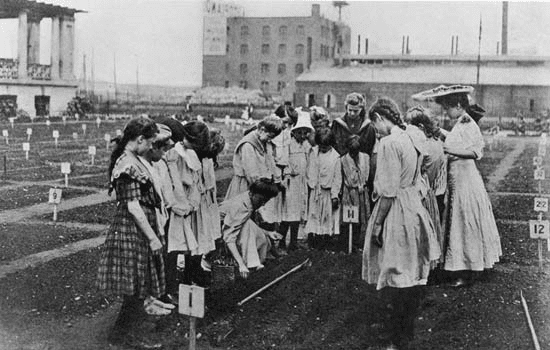
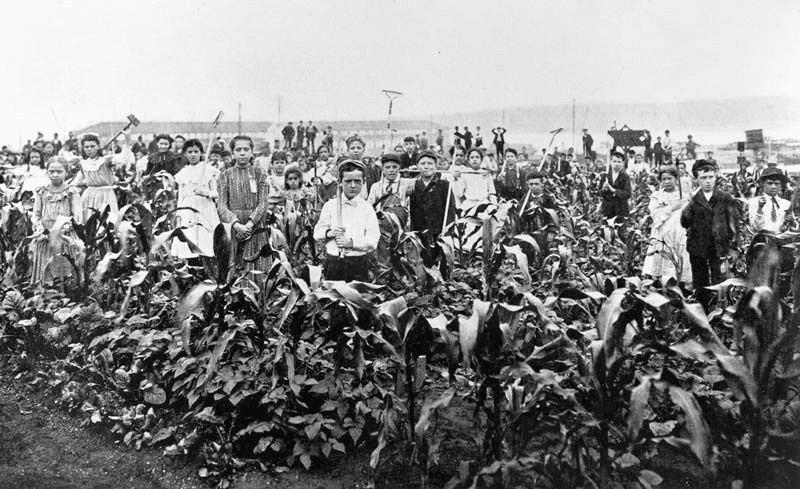
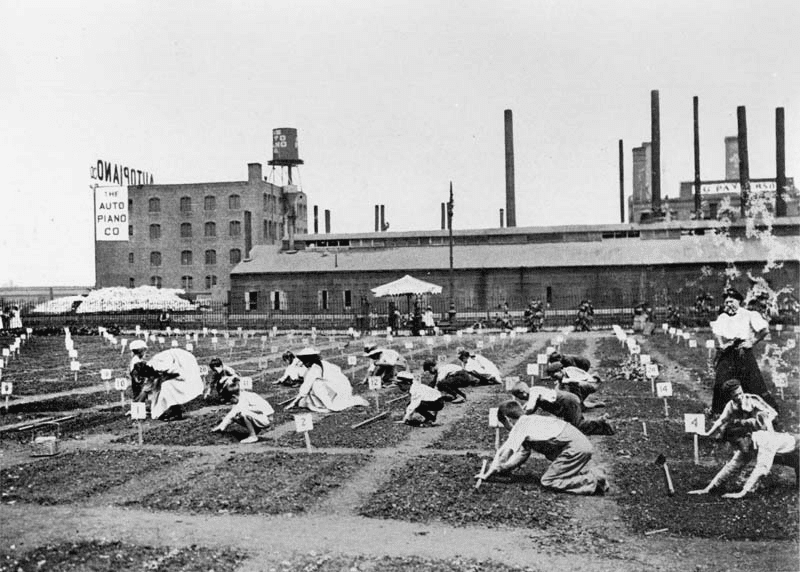
Both boys and girls aged 9 to 12 could participate in this educational program. Initially, 180 students from schools for children with disabilities and 205 public school students took part, with numbers later growing into the hundreds. On a 3/4-acre plot, about 360 small gardens were cultivated. Here, students learned how to grow vegetables such as turnips, lettuce, spinach, cabbage, celery, radishes, corn, beets, beans, peas, and various plants. Each student maintained a notebook to record the growth process of their crops.
The garden also included a special building where students learned domestic skills, with separate programs for boys and girls. Parsons believed this program provided invaluable lessons in connecting with nature and taught social skills such as communication, cleanliness, orderliness, honesty, kindness, fairness, and other virtues. By 1908, this educational program had been adopted by various American schools.
Closure of the Original and Emergence of New Gardens
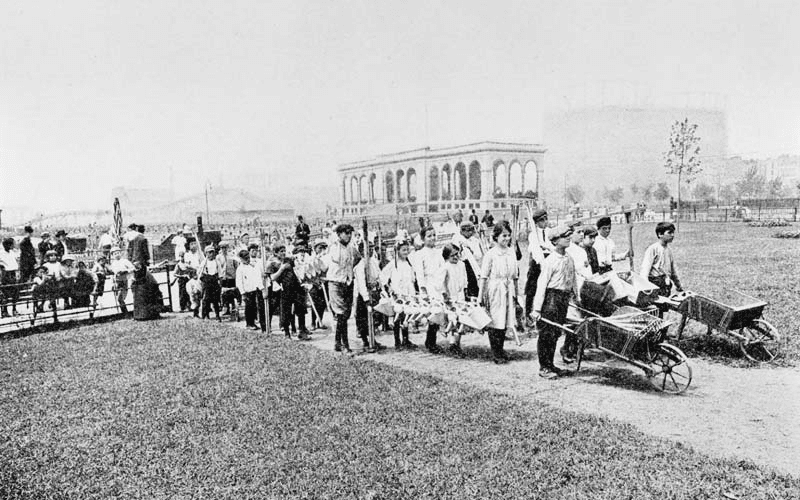
The farm garden in DeWitt Clinton Park operated until 1932, closing due to the construction of a new highway. However, the farm gardening project continued. In 1911, a similar initiative was launched in Thomas Jefferson Park in Harlem, covering 2 acres with approximately 1,000 garden plots. In 1913, another 3/4-acre garden was established in Corlears Hook in the Lower East Side. Additional gardens appeared in Brooklyn, including in McCarren and Betsy Head Parks, hosting about 715 plots serving 1,430 children. The concept was highly popular and continued into the 1960s.
Over time, the garden concept expanded to include “a piece of the countryside in the city.” These gardens began growing economically valuable crops like wheat, Indian corn, cotton, peanuts, and flax. By 1950, there were nine agricultural gardens in city parks, continuing until the 1960s.