

The Waterside Generating Station was one of the first steam power plants in the United States, initially producing electrical energy and later steam. This article explores its establishment, unique features, and eventual fate. Read on for details on manhattanname.
Establishment and Operation of the Station
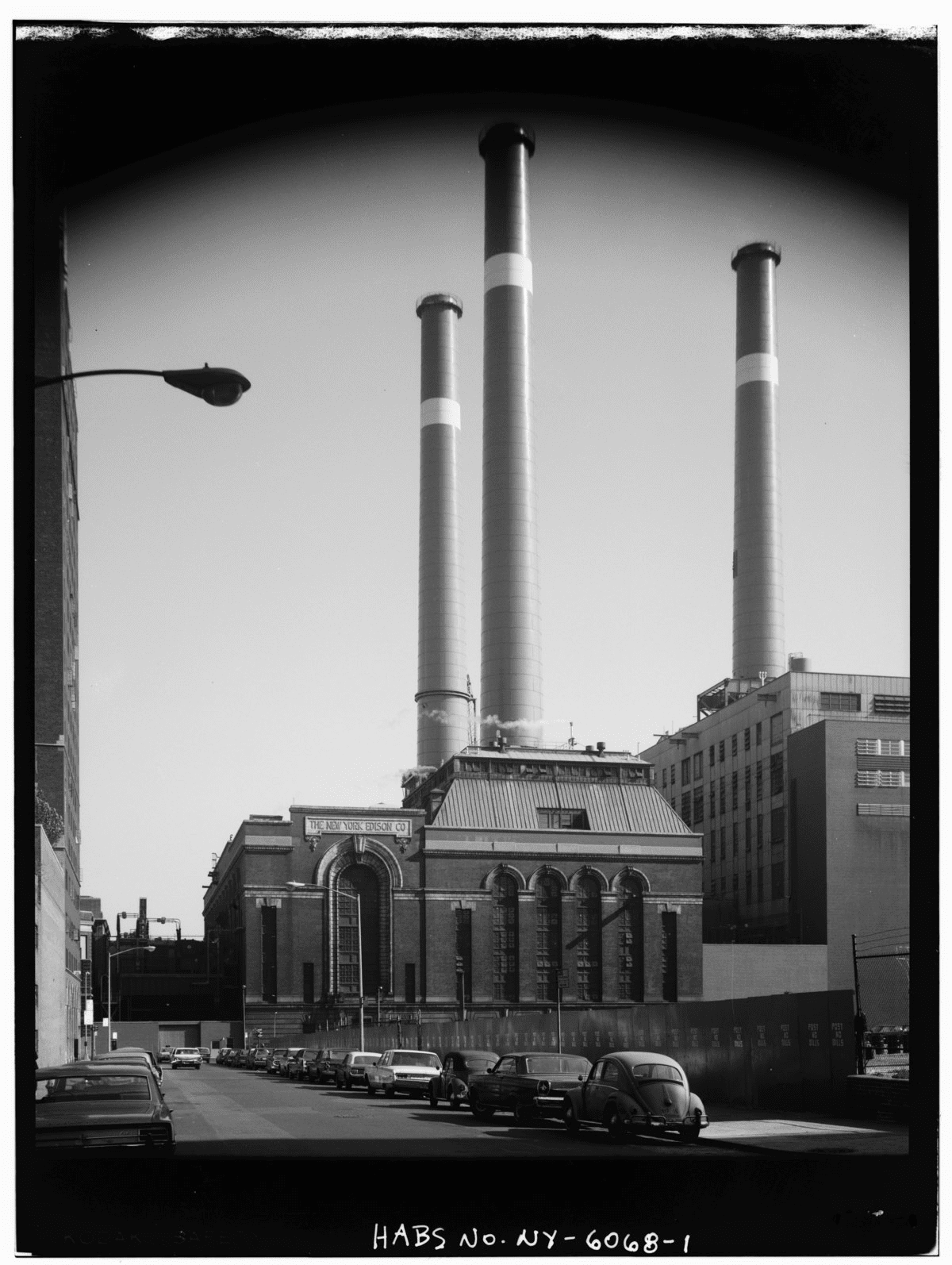
The Waterside Generating Station was a steam power plant located in the Murray Hill neighborhood, between East 38th and 40th Streets along the East River.
Prior to its construction, Manhattan already had a few power plants, but they were small and insufficient to meet the city’s growing electricity demands. Recognizing the need for further electrification, the Edison Electric Illuminating Company planned a larger and more powerful station to adequately serve consumers. Smaller stations would serve as auxiliaries.
Planning for the Waterside Generating Station began in the late 1890s, and land was purchased for its development. However, construction was delayed to allow for comprehensive research. Renowned American experts John Van Vleck, Arthur Williams, and John W. Lieb traveled to Europe to consult with foreign specialists.
The first unit, “Waterside No. 1,” was completed in October 1901, between East 38th and 39th Streets. Initially designed to house 16 steam engines, it ultimately operated with 11. The plant’s turbines generated up to 6,600 volts of alternating current, which was then sent to substations, converted to direct current, and delivered to consumers.
As demand for electricity grew, a second unit was needed. A neighboring site, between East 39th and 40th Streets, was acquired, and in 1906, “Waterside No. 2” was commissioned. The two units were interconnected both mechanically and electrically. The first unit primarily supplied Manhattan, while the second provided power to the Bronx, Queens, and Westchester. At the time, Waterside No. 1 had a capacity of 157,000 kilowatts, and Waterside No. 2 had 140,000 kilowatts.
The plant’s proximity to the East River allowed for convenient coal deliveries via cargo ships. Coal was transported to the station using elevators and conveyor belts, with enough fuel stored to last about two weeks. Ash and other residues were removed similarly for disposal. In the 1920s, the station underwent expansion, and the company rebranded as Consolidated Edison.
By 1937, the Waterside Generating Station became the first power plant to produce both electricity and steam. At this time, its capacity reached approximately 370 megawatts.
Challenges
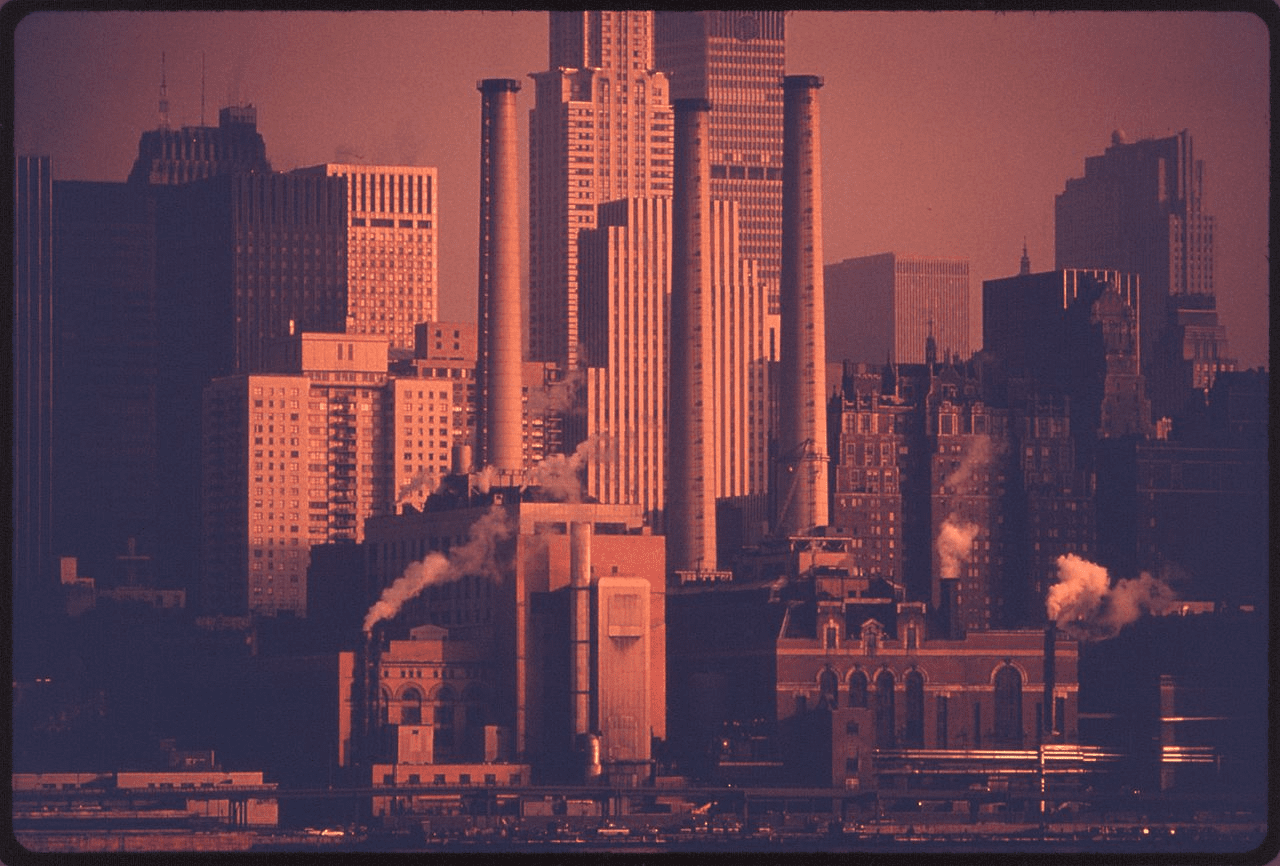
In the 1950s, the station faced challenges due to its proximity to the newly built United Nations headquarters. U.N. representatives raised concerns about air pollution caused by the plant’s emissions. However, the U.S. Federal Power Commission found no significant danger from the emissions and proposed measures to improve air quality. Then-Mayor William O’Dwyer suggested switching to gas fuel, while the Federal Power Commission proposed raising the smokestacks. The latter idea was dismissed due to potential hazards for aircraft. By 1963, the station partially transitioned to natural gas.
Another issue arose in 1992 when a hydraulic shock caused an explosion at the plant, injuring eight workers. The company was fined $217,800 for the incident.
Decommissioning
In 2005, the Waterside Generating Station was decommissioned and sold to private developers. The plant was subsequently demolished, and the site was cleared and repurposed for residential and commercial development.