

New York and its five boroughs, one of which is Manhattan, have never experienced strong earthquakes throughout their history. While the intensity of the most destructive underground shocks ranges from 7-8 to 12 on the earthquake magnitude scale, Manhattan has remained untouched. However, the earthquake of 1884 left a lasting mark in the historical chronicles of Manhattan. To learn more about how the borough was affected and how it recovered from this natural disaster, continue reading on manhattanname.
Earthquakes in Manhattan are rare
One of the recent earthquakes that occurred directly near the Manhattan area in 2011, according to local media reports, had a magnitude of up to 5.9. The epicenter of the underground tremors was located in the vicinity of Virginia and affected numerous urban areas in the northeastern part of the country.
Making specific comparisons regarding earthquakes in the Manhattan area is difficult because New York has rarely encountered significant challenges from subterranean nature. However, some things can still be said: for example, earthquakes in the city have been documented since December 18, 1737. The tremor that year had a strength of approximately 5.2 on the magnitude scale and caused vibrations in the holiday chimneys.
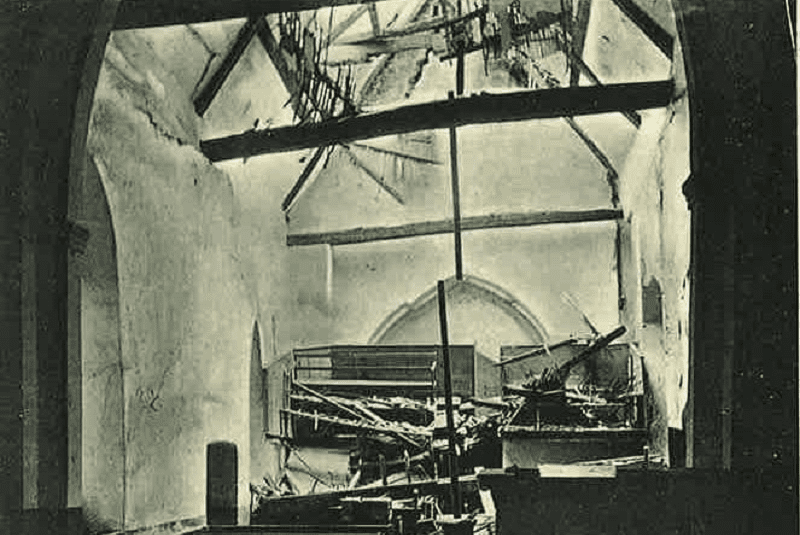
Source of the photo: https://www.gazette-news.co.uk/
The Earthquake of 1884: How Manhattan Was Affected
On Sunday, August 10, 1884, the borough of Manhattan experienced yet another significant earthquake, bearing many similarities to the seismic event in California. According to the “New York Tribune,” the following day, there were “unusual sensations directly within Manhattan, but no one was harmed as a result.” It was then that “The Sun” newspaper released an article titled “Earthquake Shakes Us.” The earthquake occurred in two separate jolts, around 2:07 p.m. local time (according to the clock located at City Hall). The majority of New York residents living in the year 1884 had never encountered such natural phenomena before.
The first tremors caught the city dwellers by surprise. Their initial reaction to the tremors was one of confusion, as such a thing had never happened before. Some curious residents hurried to their windows in the direction of the immediate epicenter, eager to learn the details of what was unfolding. Interestingly, according to information from newspapers of that time, a significant number of townspeople believed it was a “runaway carriage” fleeing from its owner.
The lack of understanding among the residents of New York City and Manhattan was accompanied by disorientation and panic that engulfed them. Concerned individuals and local authorities began urging residents to evacuate their homes and head to open spaces (such as parks). A significant number of borough residents gathered near City Hall.
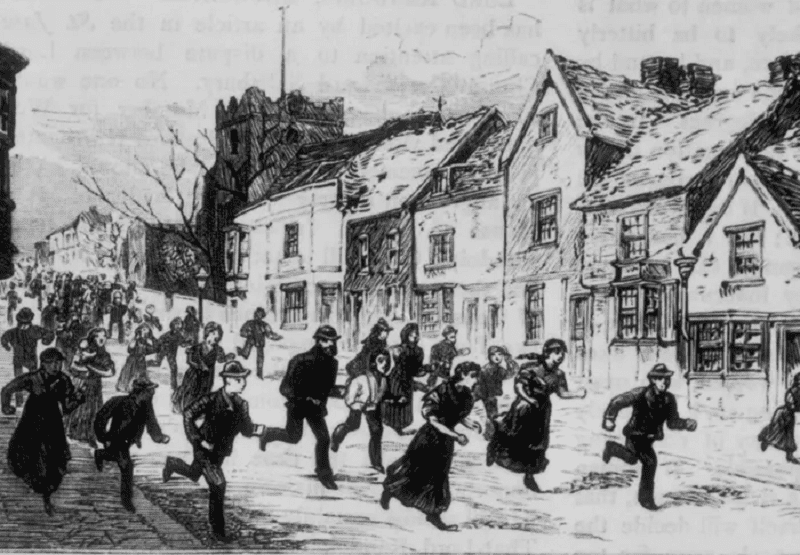
Photo source: https://www.theguardian.com/
Unfortunately, the earthquake of 1884 brought devastation to areas of New York City and Manhattan itself. From the early hours, reports of extensive damage started pouring into the local media outlets such as newspapers and printing presses. The earthquake had destroyed buildings in the Lower East Side, leaving residents homeless.
More experienced inhabitants, such as immigrants, gathered their belongings (personal documents, clothing, and some even furniture) without panicking and then evacuated their homes to seek safe places. The earthquakes affected any structures in the borough of Manhattan. Newspapers even received information that the underground tremors of 1884 had demolished regular stables and their owners, in despair, tried to salvage the last remnants of their livelihood.
Most were affected by the earthquake: it destroyed everything
The earthquake of 1884 destroyed everything without exception. It affected not only the residents of Manhattan and New York but also the guests and immigrants of the country. The luxurious residences where prominent people of that period lived felt the underground shocks of that year most acutely. Due to the large area covered by such buildings, the vibrations of the natural phenomenon disrupted their equilibrium.
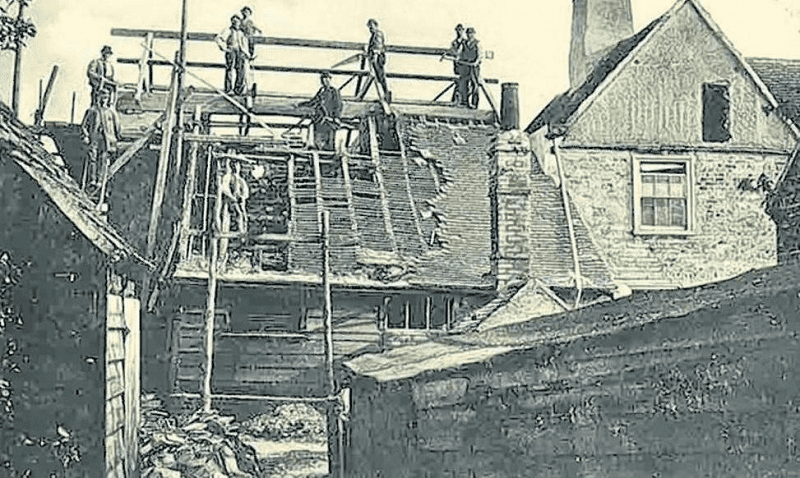
Photo source: https://www.gazette-news.co.uk/
The staff of the popular “Fifth Avenue” hotel in Manhattan shared some information about the earthquake with the media sources. According to the employees, the upper floors of the buildings in New York City and its boroughs were particularly affected, with chandeliers swaying and clinking. At the Astor House, the coveted collection of colorful drinking glasses was shattered and scattered across the floor. Therefore, one can conclude that there was no district unaffected by this natural disaster.
No one had suspected that an earthquake was approaching at that time
Throughout New York City and its neighborhoods, rumors began to spread regarding the possible causes of significant destruction in the city. Some residents claimed and attempted to prove that a gas plant on 14th Street had exploded, while others speculated that dynamite had caught fire in the Hell Gates.
The Harlem speaker also made some assumptions. According to his statement, the cause of these disturbances was one of the city’s natural faults on 125th Street. Manhattan is located on a rocky promontory that, so to speak, “was unexpectedly struck by whale” passing by and the flick of its tail caused serious underground tremors.
Of course, all these assumptions were later proven false, as the cause of the destruction was a natural phenomenon. However, the residents of New York City and its five boroughs can be understood. People of that period could not have anticipated such a natural disaster, as a significant number of them had never experienced it. The tremors were felt sporadically by local residents; for example, residents along the Hudson coastline reported the clattering of dishes, while guests and visitors on the newly constructed Brooklyn Bridge hardly felt anything. Certain electrical facilities and telegraph services experienced brief interruptions.
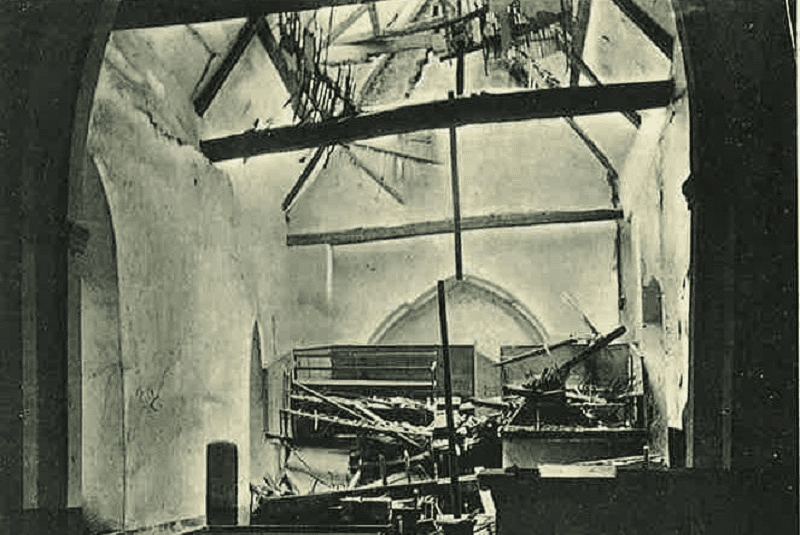
Photo source: https://www.gazette-news.co.uk/
In the Goffman House, right in the center of the city, one of the California entrepreneurs talked to his companion. He calmly remarked that if everything in New York wasn’t securely fastened, he would dare to say in such a case that his colleagues were experiencing an earthquake. But as it turned out later, even the nail fastenings couldn’t save Manhattan from numerous damages. According to reports from the “New York Sun,” earthquake tremors were observed the next day in Far Rockaway, as well as in certain areas of New Jersey.
Seismic safety considerations after the events of 1884
Earthquakes in Manhattan are usually associated with the fact that the borough of New York is located near seismically active zones, such as the boundary zone between North America and Eurasia. Despite the rarity of strong earthquakes in this area, Manhattan and its infrastructure take measures for resilience and preparedness for possible seismic events. Buildings in Manhattan are typically constructed with seismic safety in mind and people receive education and information about precautionary measures in case of earthquakes. This helps minimize potential risks and ensure the safety of Manhattan residents in the event of earthquakes.
Manhattan takes serious safety measures to protect its residents from potential earthquakes. The city has strict building codes and requirements that include seismic resistance of structures. Buildings in Manhattan are constructed using modern technologies and materials that enhance their ability to withstand seismic loads.
In addition, systematic inspections and maintenance of existing buildings are conducted to ensure their safety and functionality. This includes regular inspections, checking structural elements and updating seismic systems.