

When people speak of Manhattan’s green spaces, the first thing that comes to mind is Central Park or other popular spots with enormous lawns, original fountains and stunning flowerbeds. But there are places almost unknown to tourists. These are the small gardens, filled with a cozy and comfortable atmosphere. Each of them has its own unique history of creation. Gardens vary in size, the number of plantings, the presence of sites and the possibility of hosting events. However, they are all irresistible, interesting, original and attractive in their own way. Learn more at manhattanname.
Tudor City Greens
Tudor City Greens are the name of two parks in Manhattan with large numbers of plants and trees. Although they don’t occupy a large area, they serve as one of the favorite recreational spots for residents of Manhattan and all of New York City. These gardens get taken care of by independent workers from various companies, as well as by eco-volunteers, who perform the necessary actions every week. Their job also includes organizing all kinds of events. It can be the development of cultural programs, summer evening concerts, solemn events for Christmas, or exciting celebrations for children. This great location contains plenty of benches to sit on, where you can hold a business meeting or talk about small secrets to a friend, read your favorite book, or enjoy the sunshine and spend time outdoors with your children. Optionally, you can rent this incredible location for a photo session, a wedding ceremony, or whatever celebration you want.

These parks are called gardens for a reason, as they have some truly rare species of plants. The ordinary citizens come here in the spring to see magnolia blossoms and other magnificent enchanting flowers and plants. As for people with professions related to botany and science, they observe the growth of azalea, dwarf boxwood, Japanese maple, lavender and many other species. Representatives of the garden’s administration report about it on the official website.
Greenacre Park
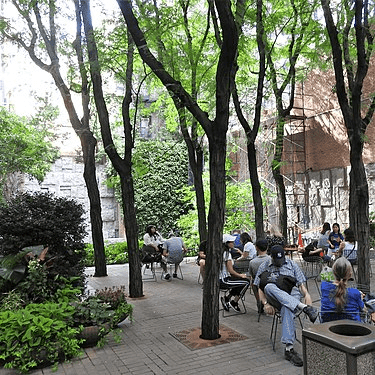
Greenacre Park is a public park in Manhattan. Its official opening took place in 1971. To create the park, three parts of the grounds where the synagogue, store and garage used to be located were combined. Besides many plantings, such as acacia trees, azaleas, oaks and maples, you can find a waterfall that creates a kind of oasis and muffles the noise of the city, reaching seven meters in height. There are also structures for heating during the cold seasons. For some time, the park was on the verge of extinction since the New York City Council allowed the construction of tall buildings near the garden. That could have had severe negative consequences for the vegetation because, under such conditions, all the trees and flowers would remain in the shade the entire time. Various studies have been done on the subject, with one side claiming there was no threat and the plants would receive sunlight, while the other side claimed it was only possible if built in certain areas. These actions led to demonstrations by eco-activists. As a result, the city council banned the construction of tall buildings around the park.
Septuagesimo Uno
What sets this garden apart is its location in a mysterious alley, where you are unlikely to be quickly found by anyone. It is a small, accessible park created between several houses. Its name translates from Latin as seventy-one, reflecting the street number on which it is located. Despite its small size, visitors can enjoy its cozy atmosphere, which is sometimes a great need for a typical city dweller. People come here to have lunch or get away from work for a moment, read the morning paper, or casually discuss an idea with colleagues.
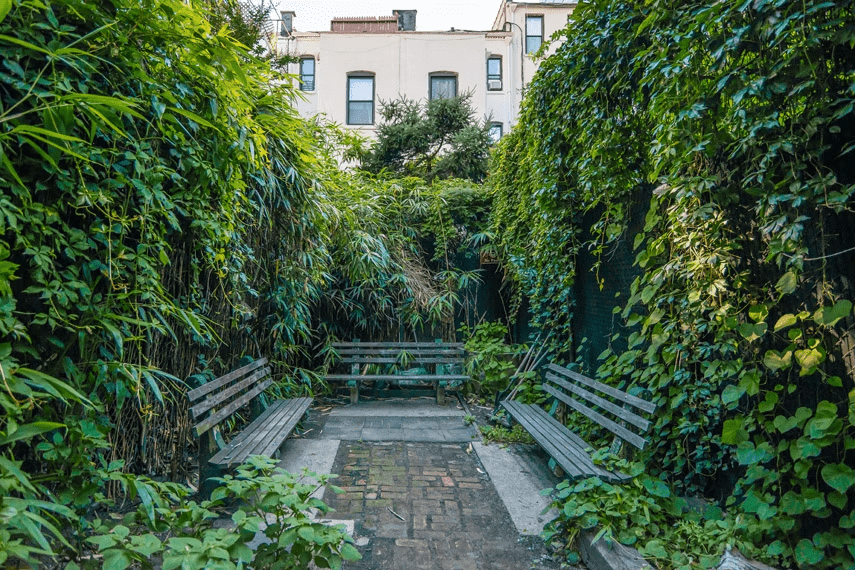
This park stands out for its small size consisting of a few benches and plenty of green space. Unlike the two gardens mentioned above, here you will not find rare plant species and waterfalls, but you will sense the smell of nature and fresh air.
Lotus Garden
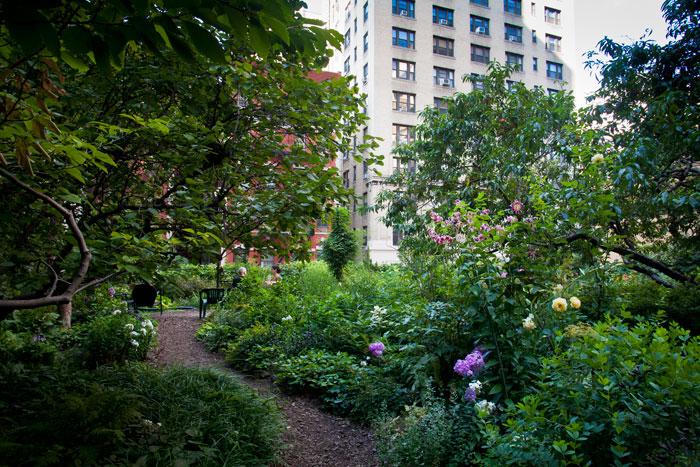
Lotus Garden is one of Manhattan’s first green roofs, once used to protect one of the city’s garages. This beautiful garden was created in the late 1980s by ordinary locals for recreation and leisure. For its unusual location, it is often called an oasis in the sky. It has a variety of gorgeous flowers, fruit trees and original bushes, while its crowning attraction is its small artificial ponds with goldfish swimming in them.
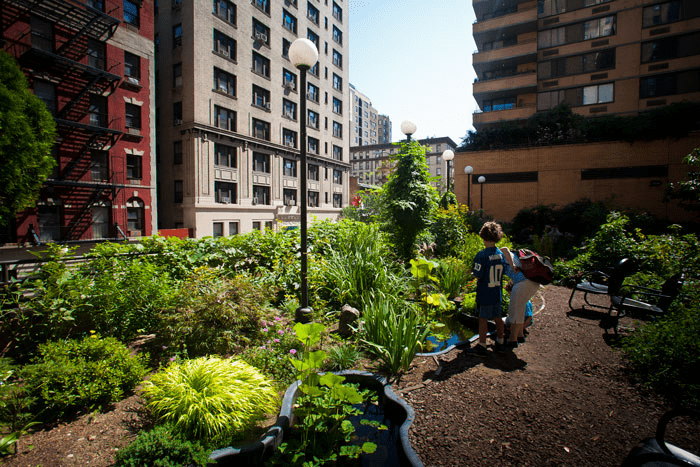
Twenty-eight gardeners and some volunteers keep the rooftop park running. Each elected member of the gardening community has a private area where they tend the plants and maintain the overall backdrop. Thus, the garden itself is divided into 28 parts, all of which are original and unique in their own way. To join the community, you must apply on the official website and pay an annual fee of twenty dollars. Unlike other similar recreation venues, this garden does not provide opportunities for celebrating events, holding various activities and renting for ceremonies. Here is a cozier location with the goal of relaxation, rest and enjoyment of nature. Also, the park does not offer group excursions. Nowadays, only members of the garden community can visit the garden every day, but the location is open to everyone for a while every Sunday.
The Gardens at St. Luke in the Fields
The Gardens at St. Luke in the Fields is a perfect place for those who like to walk along the wavy paths, watching the variety of tulips, lavender and roses. There is indeed an abundance of flowers with varying colors of flowerbeds depending on the time of year. The history of the garden conceals many events and phenomena. After all, the first plants appeared here as early as 1842. Unfortunately, in 1990, most of the plantings died because a natural disaster struck the Manhattan area. Then a hurricane destroyed almost all the plants in the park. Over the years, new species of flowers, trees and bushes have been planted, so now the garden has become a great place to relax and enjoy your free time. The garden belongs to the church next door. Its workers maintain the plants and clean the picturesque areas. Church representatives welcome visitors and positively respond when people come here to introduce their children to nature. They can also tell people interested in botany in more detail about the rare species of plants that grow here. You can have a small picnic in the garden or just come with a cup of morning coffee, but drinking alcoholic beverages and smoking is strictly prohibited. Also, you won’t get a favorable comment if you want to feed birds in the park. That’s actually unnecessary, as the church workers hang specially designed bird feeders on the trees.
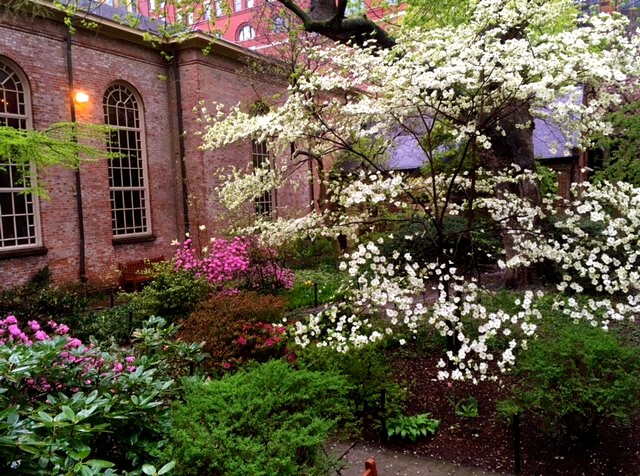
Since the place itself is located in the southwestern part of the borough, it formed its own microclimate, contributing to the development of flora and fauna. The presence of brick walls, which retain heat, also plays a significant role. This green area, with its abundant flowers and berries, serves as a kind of migratory point for many birds, where they stay for a while in the spring and fall. About 100 species of birds and 24 species of butterflies were detected within the garden.