

The United States is one of the most advanced countries in the world. Their cities are replete with various scientific centers, attractions, research laboratories, and educational institutions. We could talk a lot about them and describe the latest developments of the researchers of this country, but it is worth highlighting the fascinating natural history sites. Americans have always tried to explore and improve the natural environment. They have also paid great attention to the history of evolution on their own lands, ancient culture, knowledge of nature and ideas about the Universe in general. All these things have been collected for years in the renowned Museum of Natural History located in Manhattan. About five million people visit this place every year, with ordinary sightseers and professional scientists coming from across the globe. The American Museum of Natural History is one of the world’s best known, so it would be curious to know what lies behind its high-profile name and mysterious history. Find out more at manhattanname.
Location and tourist attraction
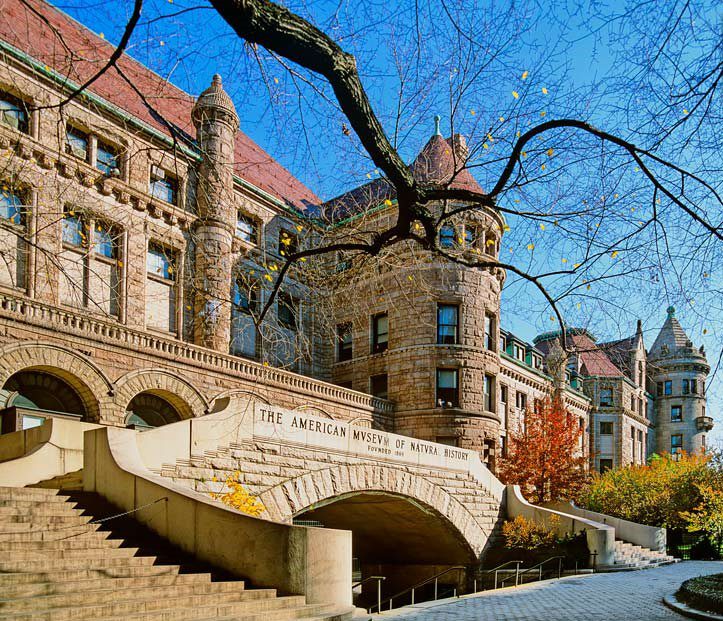
The museum is located in New York City, Manhattan. The location is quite known to many people, as the site itself was built in Theodore Roosevelt Park, plus you can visit another place of interest nearby, Central Park. Seeing the sights, enjoying nature and just relaxing are all things visitors can do before they even get to the museum. Park territory is quite large, so people come just to escape from the routine of life, walk between green spaces and chat with friends. Located next to New York City’s Central Park, the museum attracts many tourists and visitors to the city. The American Museum of Natural History has 26 interconnected buildings that contain 45 different exhibition halls. Its territory hosts a library and a planetarium as well. In other words, to explore the museum in full, you will need to come here more than once or even twice. People who have been to this place in the past, each time they are surprised because they discover new intriguing exhibits and exciting specimens.
History through the ages. Museum establishment and reconstruction
April 6, 1869, is considered the official date of the museum’s establishment, except that, for some time, it was located in another building in Central Park. The creation of such a museum was closely related to a cherished dream. The distinguished natural history professor Albert Smith Bickmore spent years trying to pave the way for the beginnings of such an enormously important site for science. Perhaps fate itself helped him because then New York Governor John Thompson Hoffman approved the idea. Moreover, the project to create a new building to house the exhibits and scientific activities found several sponsors. It was from this event that the long way of development and filling of the museum began, which continues to this day.
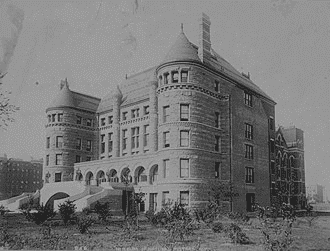
Photo: Wikipedia
The first building of the museum was presented in 1877. It was a magnificent and sophisticated example of the Gothic style, but the modern visitor would hardly distinguish it from the whole complex of buildings. This unique and original structure was later overlapped by adding a new area to the museum as an addition and expansion.
The work to improve the site continued almost a century later. In the late 1990s, Roche-Dinkeloo, an architectural firm, undertook a series of renovations to the museum. Chief Architect Kevin Roche has pledged to be responsible for the master planning of the museum. In 1991, the firm renovated the Dinosaur Hall, followed in 1992 by the organization’s representatives who designed the most prominent facility in the museum’s history, the eight-story library. In 2009, the museum’s south facade was renovated and restored, along with the murals in Theodore Roosevelt Memorial Hall, which were restored in 2010.
Variety of exhibits
We all know that the core value of a museum lies in its exhibits. After all, these are the things for which the site was created, as well as a lot of scientific research, expeditions and excavations were conducted. The total number of specimens is about 34 million and includes exhibits of animals, plants, human remains, rocks, meteorites and minerals. The most popular and informative are the Birds, Reptiles and Amphibian Halls, as well as the Mammals Halls, the Cultural Halls and the Hall of Planet Earth. You can see with your own eyes the development of life on our planet by walking through the museum.
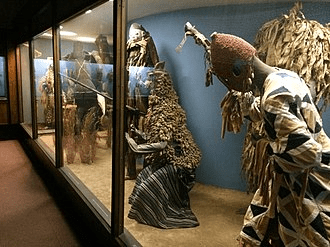
Perhaps most interesting is the observation of the specimens that tell the story of the origin of man. First of all, the very history of the creation and existence of tribes in different parts of the world and their subsequent fate is indeed fascinating. Visitors gaze with great admiration at their own kind and, for a moment, drift away into an entirely different world. The Hall of Asian Peoples is honestly astonishing. Here you can learn about the life of the tribes that lived on the territory of modern China, India and Japan, as well as view artifacts from all over the Asian continent. This hall contains realistically reproduced figures of people, processes of various rites and samples of clothes of that time.
A series of halls have been created to display the culture and origin of the Indians, placing great emphasis on the lives of Native American peoples. The most extensive number of expeditions have been made to create the collections of these halls. There are also Halls of African Peoples, Mexico and Central America and Hall of Human Origins.
After learning about human history, you can contemplate global issues, such as looking at a real meteorite and learning essential information about human impact on the environment. One of the most striking specimens stored here is the Willamette meteorite. There are also specimens presented that have required some specific chemical processes for their obtaining. These are nanodiamonds, extracted from the meteorite chemically, that are extremely small and 5 billion years old. The model of our planet in the Hall of Planet Earth is fascinating and captivating. It is a peculiar simulation of the planet’s structure and composition. The artificially created core and mantle are in the middle, with elements of the Earth’s crust surrounding them.
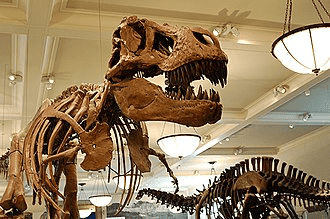
Animals will be interesting exhibits for people of all ages. The number of halls devoted to these objects is quite impressive. A ten-story building has become a place for storing the remains of ancient animal species. This place houses the fossils of dinosaurs, elephants, mammoths and many other ancient species. Unfortunately, not all of them are open to visitors. Some are kept in the depths of the museum and serve as material for research and experiments. Although, given the size of the museum, tourists would not even have time to look at half of the proposed exhibits.
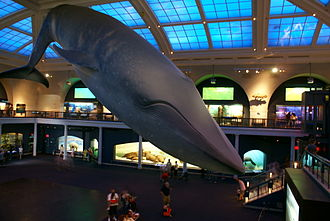
Museum Research Library, a source of knowledge and science
Located within the museum is a research library open to staff and visitors. The fund had contained books on zoology, biology, travel, and general information since its inception, but in 1903 the American Ethnological Society assigned its resources to the museum as a depository. After that, the library was substantially enriched by various scholarly works. Soon other prominent American institutions began to provide books as well. The museum’s present-day collections contain about 550 thousand manuscripts, monographs, films, archives, photographs, illustrations and books.