Where did New Yorkers dump their garbage and waste in the old days? A hundred years ago, just like in other states, New York had a huge waste disposal problem. Even in the city’s wealthier neighborhoods, when the snow melted in March, the streets were not only dirty, but piled high with manure, garbage, and dead animals. This was because for most of the 19th century, sanitation, plumbing, and garbage collection were private, not municipal, services, as manhattanname.com writes.
New York drowning in waste
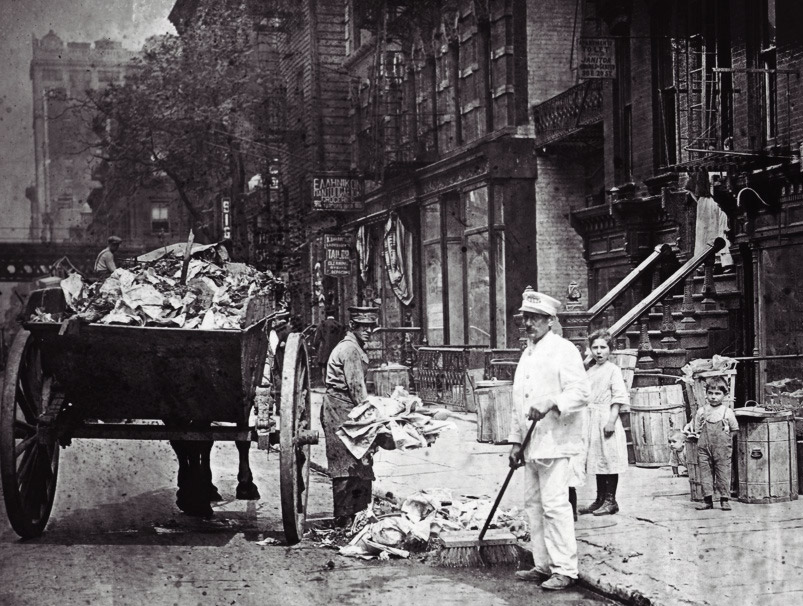
At the beginning of the 19th century, piles of garbage and waste rotted on every New York street. Human and animal waste mixed with ash and street dirt. Public baths, drinking fountains, and toilets were only built after 1897. In 1873, a huge open cart stood on 6th Avenue. Excrement dripped from its sides, staining the sidewalks and gutters. The stench could be smelled a block away. Before municipal sewer systems, excrement accumulated in deep pits in the ground. But these cesspools had a limited capacity. When they eventually filled up, “night soil men” were called to clean them out.
In those days, human excrement was called “night soil” because it was removed from outhouses under the cover of darkness so that high society wouldn’t have to confront its own waste. When men carted away the “night soil,” it left a terrible, stinking trail.
As cities grew larger and more populated in the 19th century, their meager urban infrastructure couldn’t handle the massive amount of human waste produced by residents. New York was considered the filthiest city of all. In 1844, it was estimated that Manhattan residents alone produced nearly 800,000 cubic feet of excrement—enough to fill the trunks of almost 53,000 average-sized cars.
The struggle with excrement
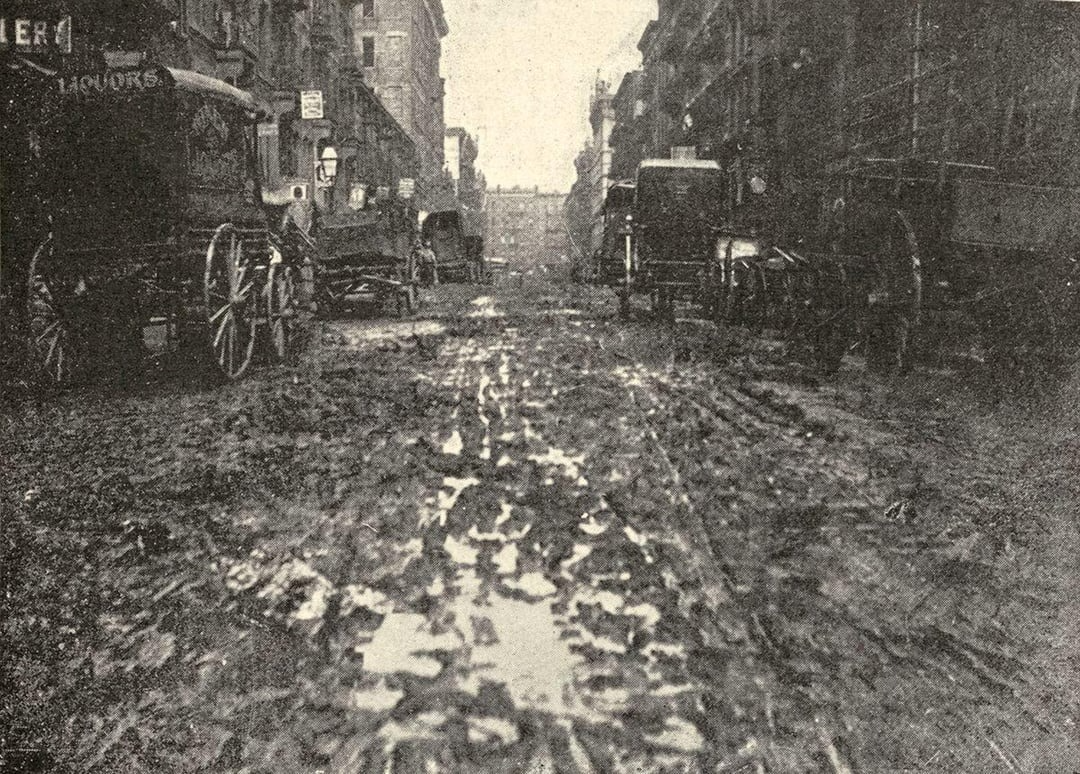
In New York, foul-smelling loads were sometimes taken to rural farms for use as fertilizer. But more often, they were transported at night to a special pier and dumped into the Hudson and East Rivers. The waste settled on the piers, and city workers periodically had to scoop the excrement out so that boats could dock properly. In Washington, D.C., a city dump was made on a field near the White House.
Few people know that the collection of night soil was a big business. Hundreds of men—mostly African Americans and immigrants—ran independent businesses or were city contractors. The night work made them vulnerable to hooligans who sometimes threw stones at the men or shot at their horses.
People were paid a decent wage for the dirty work. Night soil collectors used primitive long-handled scoops or buckets to transfer the foul-smelling waste into barrels or carts. A cesspool had to be emptied and cleaned two or three times a year. And even when flush toilets began to replace outhouses at the end of the century, there was still a lot of work to be done, as many cities still hadn’t built enough sewer pipes to connect every house to the public sewer system. By 1880, two-thirds of all flush toilets still emptied into backyard cesspools, which were sometimes cleaned every 10 days to keep them from overflowing.
An overflowing toilet was a horrific sight. In his 1882 report on life in the streets of New York, James McCabe described one man’s yard where the contents of a toilet drained into a street sewer, creating a small waterfall. The cascade of wastewater flowed right under a window, so that anyone sitting in a chair by the window not only smelled the foul odor but also looked at the disgusting mass circulating at their feet in a puddle below.
This system had catastrophic consequences for public health and the environment. Cesspools and overflowing outhouses created foul-smelling puddles of stagnant water that seeped into the soil and contaminated local wells, and therefore the water supply. This contributed to the spread of cholera epidemics in the 19th century, such as the 1849 outbreak that killed 5,000 people in New York City alone.
Waste disposal measures
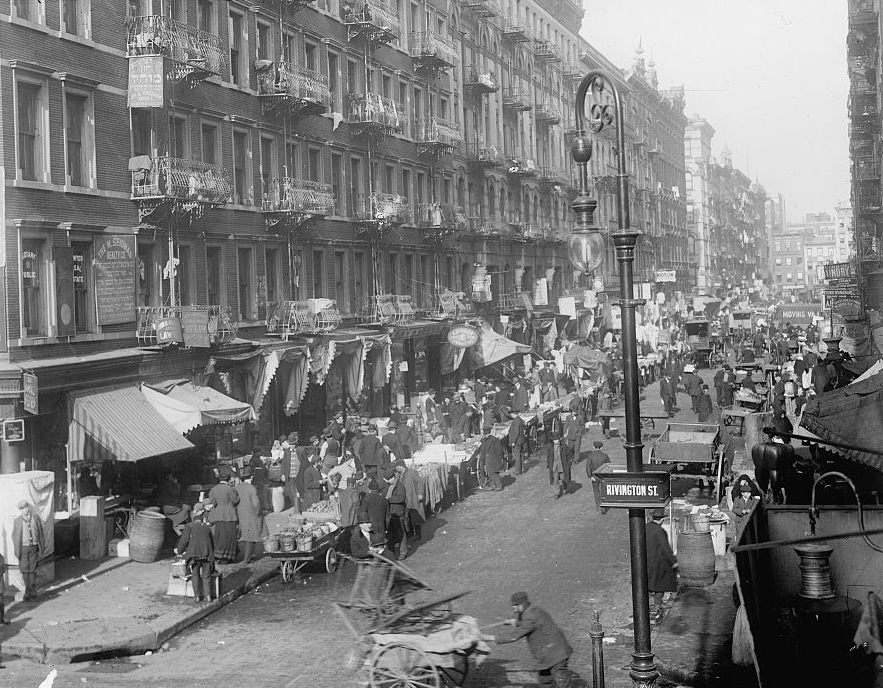
By the end of the 19th century, new knowledge about how waste carried disease forced cities to take drastic waste disposal measures. Municipalities imposed strict fines on night scavengers who carelessly dumped their loads onto the street instead of in designated areas. Technology also helped—in 1872, New York contracted with the Manhattan Odorless Excavating Company to remove all night soil with modern pump trucks and sealed tanks that could be used at any time of day. However, even these modern devices were ineffective for some very stubborn collectors who still cleaned by hand. But neither the number of brave men nor sophisticated devices could solve the human waste problem that was sickening American cities. The best solution was the sewer system.
From the mid-1800s, cities began the slow and painstaking task of building municipal sewer systems. At the end of the century, the pace of construction accelerated significantly. By the early 1890s, 844 miles of sewer pipes had been built in New York and Brooklyn, 525 in Chicago, and 376 in Philadelphia.
Unsanitary conditions and danger led to awareness campaigns
Between 1881 and 1890, 5.25 million people immigrated to the United States, which was 9 people for every 1,000 already living there. They flocked by the tens of thousands to New York’s slums, where entire families lived in one room. People had to share one overflowing toilet and walk a block or more to get water from a well. Some lived in dumps, making a living by selling whatever they found: rags, bones, bottles, old shoes, and scrap metal.
A popular practice at the time was feeding waste to domestic pigs, which were then slaughtered and eaten, with their bones sold. However, reformers and sanitation workers objected due to the health risks. It is worth noting that pigs were most often raised in the basements of apartment buildings.
Soon, people realized that they couldn’t continue living this way and that something had to be done before the situation reached a critical point. So, special groups were formed that tried to convince immigrants that cleanliness was key to good health and that they should handle waste carefully. During that period, many women led special sanitary associations, such as the Municipal Women’s League, which lobbied politicians and conducted awareness campaigns.
In 1888, the Commissioner of Public Works was tasked with creating a citywide sewer system. In 1918, a committee of the New York Academy of Medicine characterized Manhattan as an area completely surrounded by sewage.
Despite everything, the politics of garbage disposal revolved around the question of the public versus private sectors. When New York was run by the Tammany Hall Democratic faction, street cleaning meant sinecures for loyal supporters who were controlled by the police commissioners. That is, the police believed they had more important things to do than to monitor the city’s cleanliness. When private companies began to clean up the garbage, residents complained that even after paying for the services, they had to give bribes. However, the streets remained dirty. Private carriers would pick up dead horses from the streets and take them to rendering plants when it was profitable. In other cases, the dead animals rotted. In 1880, 15,000 horses were removed from the streets of New York. By tacit agreement, for most of the late 19th century, all sorts of waste accumulated in poor neighborhoods. Garbage collectors would salvage items of commercial value, and then the city authorities would remove what was left.
Some of the waste was thrown into swamps, streams, or ravines for disposal. A lot of the waste polluted the ocean and washed up on beaches.
Saving the city
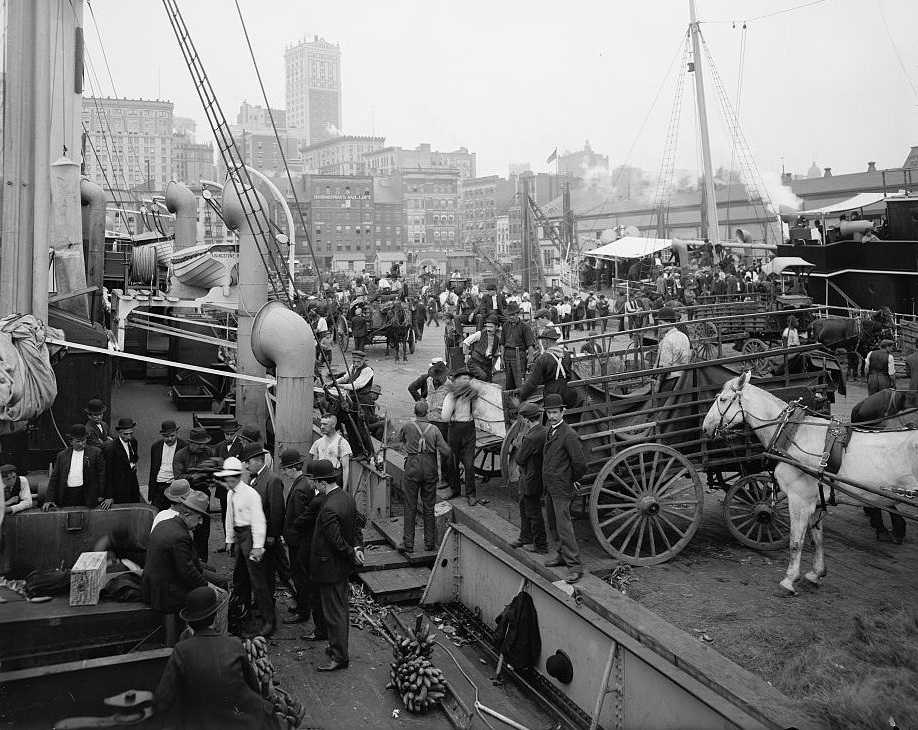
In 1895, a miracle happened—George Waring was appointed Commissioner of Street Cleaning. Two years later, New Yorkers proudly called their city the cleanest in the world. Given full authority, Waring shook up the entire system. He developed a unique method of dealing with garbage that had two goals: to clean up garbage properly, not just hide it, and to make money for the city, not for private contractors.
To this end, he banned large-scale waste dumping into the ocean and introduced a systematic recycling program run by municipal employees. One group of workers collected ash and took it to landfills, while animal waste was processed into fertilizer. Another group exclusively collected garbage—dry materials, including rags, paper, and other recyclables. Anything that couldn’t be recycled was burned in new municipal incinerators that produced enough electricity to run the plant. Waring calculated that in time, the city would begin to sell electricity to residents.
Soon, dumping garbage into the ocean was a thing of the past. After a long dispute with the state of New Jersey, the Supreme Court ordered New York to stop dumping garbage in the open ocean in 1934. From 1948, all garbage trucks went to Fresh Kills. Fresh Kills was the world’s largest landfill, serviced by house-sized machines. Old state dumps contained street waste, garbage, ballast from ships, rubble, and industrial waste. After all the efforts made to dispose of garbage and waste, New Yorkers realized that a clean and healthy city had become a reality. Gradually, decade after decade, conditions improved.