

Park · Manhattan · ⭐ 9.5/10 · 107543 reviews · updated: 2026-08-04 20:06:32
Address: New York, 10018, United States
Bryant Park — Midtown’s front lawn, and the most complete urban comeback in New York
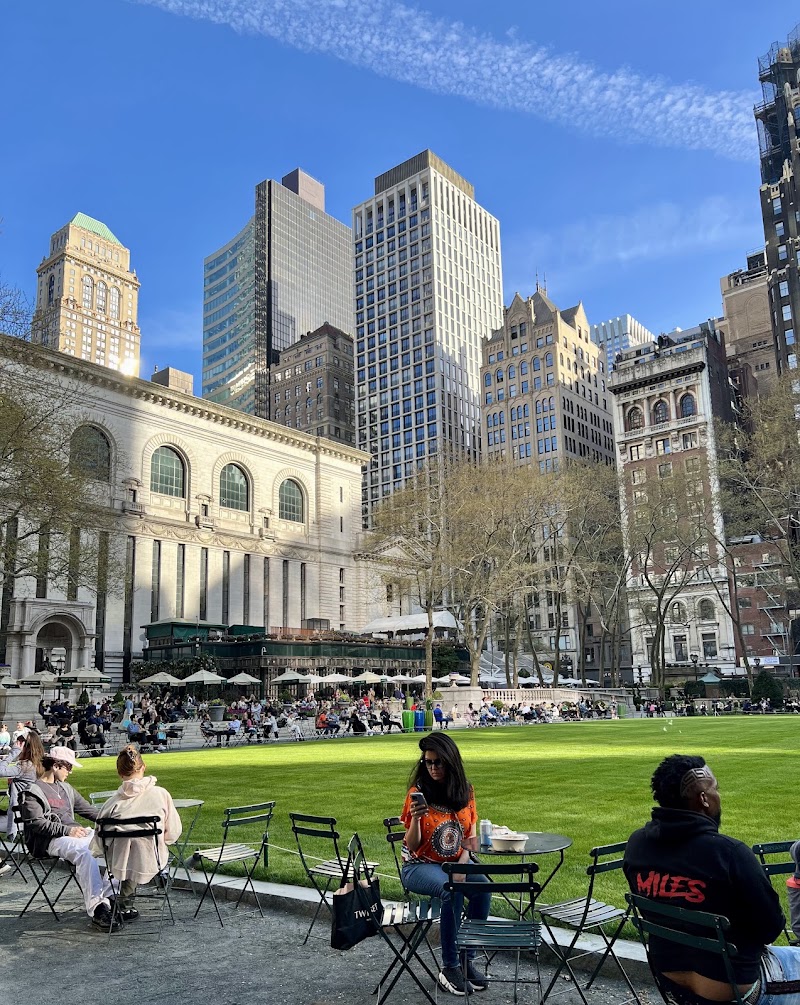
Fewer than ten acres of grass, gravel and plane trees sit behind the New York Public Library’s main branch, and on a warm weekday they hold more people per acre than any other park on earth. That density is the whole point. Bryant Park is a park designed to be occupied: thousands of loose green chairs that anyone can drag anywhere, a lawn that is mown, patched and eventually replaced every year, free ping-pong and pétanque and chess, an open-air reading room, and a programme of concerts and performances that runs from late spring into autumn. What makes it remarkable is that in the early 1980s this was one of the most notorious pieces of ground in Manhattan, a place office workers were advised to walk around rather than through. The reversal was deliberate, expensive and studied, and it is now taught worldwide as the textbook case of how a public space is brought back.
Highlights
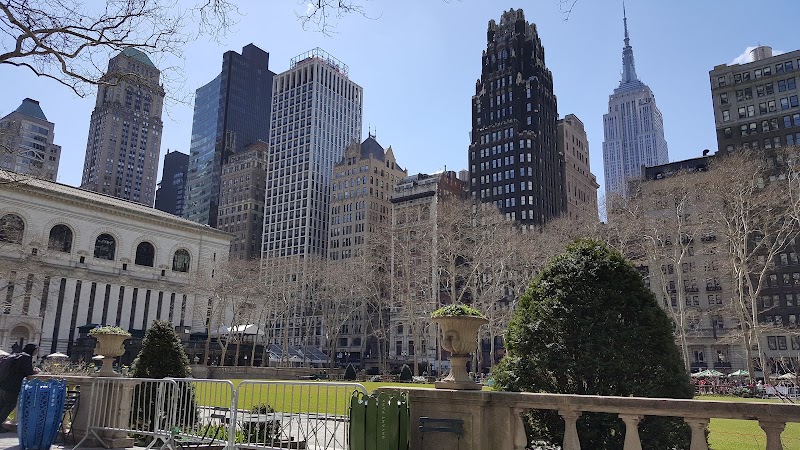
- The Lawn — a single sweep of turf, hedged and balustraded, framing the rear façade of the library. It is treated as a working surface rather than an ornament: closed periodically to recover, stripped out entirely each October to make way for the ice rink, and completely relaid in spring.
- Le Carrousel — installed in 2002 and built in a deliberately French idiom, with hand-painted animals turning to French cabaret and jazz recordings rather than the usual band-organ waltzes. It runs year-round, weather permitting, and is the reliable centre of gravity for anyone visiting with small children.
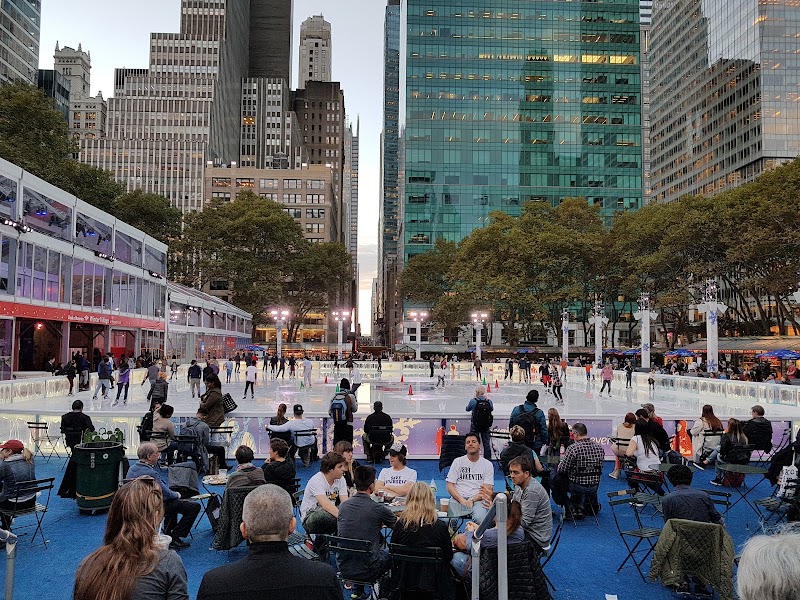
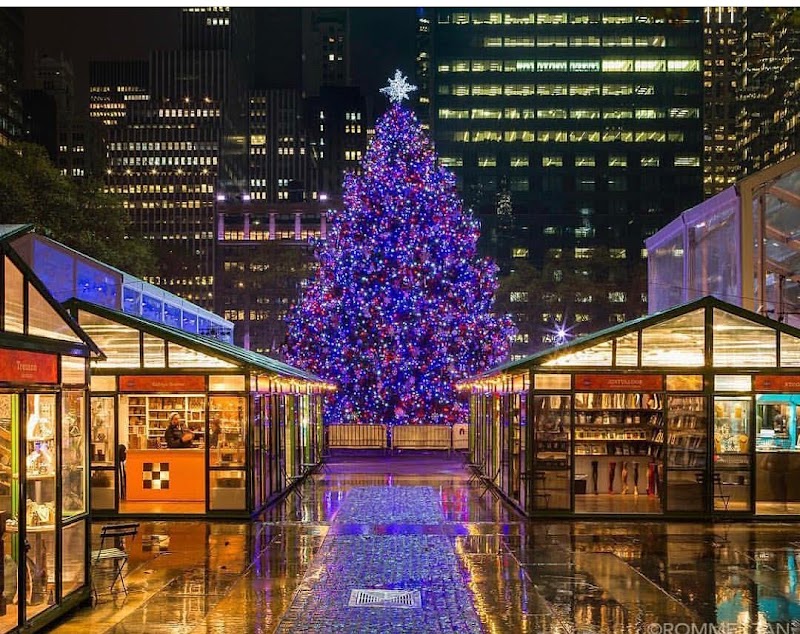
- Bank of America Winter Village and the rink — from late October the lawn becomes a seventeen-thousand-square-foot ice rink ringed by an open-air holiday market of glass-fronted kiosks. Admission to the ice is free if you bring your own skates, which is unusual among Manhattan rinks; skate hire and lockers are separate.
- Josephine Shaw Lowell Memorial Fountain — dedicated on 21 May 1912 to a social reformer who founded the Charity Organization Society and the New York Consumers League, and designed by the architect Charles A. Platt. It was the first major public monument in New York City dedicated to a woman, and it was moved to its present position at the park’s western end in 1936.
- The Reading Room — an open-air library revived in 2003, descended from a Depression-era service set up in 1935 for the unemployed. Books, magazines and newspapers are lent on the spot with no card, no deposit and no registration.
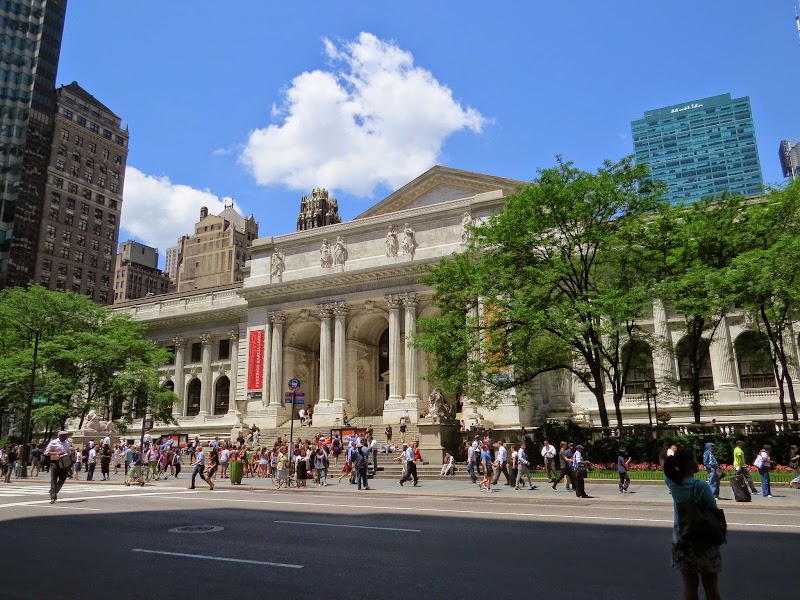
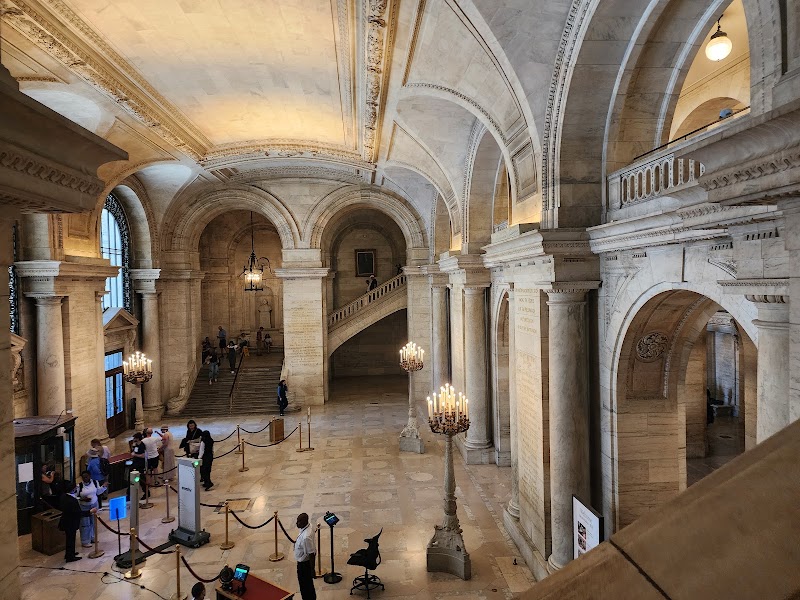
- The library terrace and William Cullen Bryant — the park’s eastern edge merges into the terrace behind the New York Public Library’s Stephen A. Schwarzman Building, which opened on 23 May 1911. Herbert Adams’s seated bronze of the poet, editor and abolitionist for whom the park is named sits under a canopy there.
What you’ll find
Bryant Park is run as a public-private partnership by the Bryant Park Corporation, which takes no city tax funding and pays for itself through concessions, sponsorship and an assessment on surrounding property owners. The practical consequence for a visitor is that almost everything is free, almost everything is maintained to an unusual standard, and there is always something scheduled.
- Movable chairs and café tables — thousands of pieces of loose furniture scattered across the gravel terraces, following the principle, drawn from the urbanist William H. Whyte’s studies, that people use a space far more freely when they can choose exactly where and how to sit.
- Free games and classes — ping-pong tables, oversized chess and backgammon, a putting green, kubb, and pétanque courts with free daily coaching from a local club; plus regular yoga, tai chi and juggling sessions in season, with all equipment supplied.
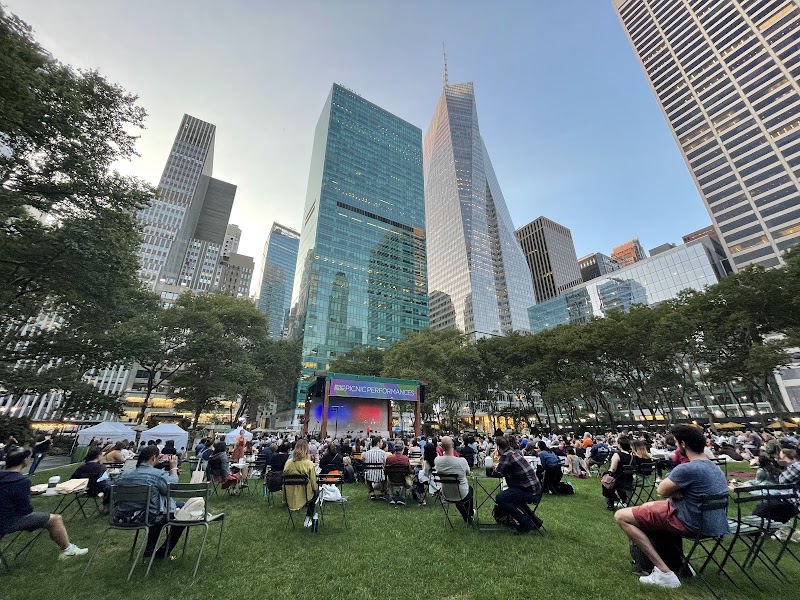
- Performance programming — a summer season of free evening concerts and dance, theatre and circus on the lawn, and lunchtime Broadway showcases where casts of current shows perform their numbers outdoors.
- Food and drink — a full-service restaurant in the pavilion at the park’s eastern end since 1995, seasonal kiosks around the perimeter, and a large open-air café terrace that in winter overlooks the rink.
- Fountains, plane trees and formal planting — the London plane allées that shade the gravel terraces, seasonal bedding along the balustrades, and the Lowell fountain running from spring through autumn.
- Restrooms — the park’s restroom pavilion is genuinely notable: staffed continuously, decorated with fresh flowers and framed art, and regularly named the best public facility of its kind in the city.
Things to do — and who it’s for
- Office workers and anyone on a lunch break — this is the park’s core constituency: grab a chair, eat outdoors, and be back at a desk in Midtown within minutes.
- Families with young children — Le Carrousel, the lawn, the games and the winter rink give a compact, low-effort outing in the middle of the city with no walking distances to speak of.
- Readers and quiet types — the Reading Room and the shaded terraces under the planes are among the few places in Midtown where you can sit for two hours with a book and be left entirely alone.
- Winter visitors — the Winter Village market and the free-admission rink make this the most accessible Christmas-season outing in central Manhattan, and it opens well before the other seasonal markets wind up.
- Culture and music audiences — free evening performances on the lawn through the summer, with picnic blankets on the grass, cover jazz, opera, dance, theatre and Broadway without a ticket.
- Urbanists and design travellers — the park is a live demonstration of Whyte’s principles, and reading the space against its 1980s reputation is genuinely instructive.
Getting there & practical
Bryant Park sits in the middle of Midtown Manhattan, directly behind the main branch of the New York Public Library, with the Diamond District and Rockefeller Center to the north and the theatre district a short walk west. Transit could hardly be simpler: the B, D, F and M lines stop directly beneath the park at the Bryant Park station, and the 7 line has its own entrance at the park’s eastern side. Grand Central Terminal and Times Square are each a few minutes on foot, which puts the 4, 5, 6, S, N, Q, R, W, 1, 2, 3, A, C and E lines within easy reach, and Penn Station’s commuter rail is a straightforward walk or one short subway ride away. Entry to the park is free at all times and there is no gate or ticket; the carousel, the restaurant, skate hire at the winter rink and some special events are separately operated and charge their own way. The park opens early in the morning and closes at night, with closing times shifting through the year and extending during the Winter Village season. Forty-five minutes is enough for a coffee and a look around; budget two hours if you plan to skate, ride the carousel or sit through a performance.
When to visit
Spring is when the lawn returns after the rink is dismantled, the tulips and bulbs go in along the balustrades, and the plane trees leaf out over the gravel — the best moment for a chair and a book. Summer is the park at full volume: free evening concerts and theatre on the grass, lunchtime crowds occupying every square metre of shade, games running all day and the fountain on. Autumn is arguably the sweet spot, with comfortable temperatures, thinner crowds, the planes turning, and the Winter Village kiosks going up around the perimeter from late October. Winter transforms the place entirely — the lawn disappears under seventeen thousand square feet of ice, the market glows after dark, and the park becomes the most heavily used piece of ground in Midtown from the end of the year through the first weeks of spring.
Good to know
The ground was set aside as public land by colonial governor Thomas Dongan in 1686, and it has been used for almost everything since. From 1823 to 1840 it served as a potter’s field, the city’s burial ground for the poor and unclaimed. In 1842 the eastern portion was occupied by the Croton Distributing Reservoir, a fifty-foot Egyptian-revival wall of masonry holding the water that the new Croton Aqueduct brought down from Westchester; the open ground beside it was named Reservoir Square in 1847. In 1853 the square hosted the Exhibition of the Industry of All Nations inside the New York Crystal Palace, a vast iron-and-glass hall modelled on London’s, which burned to the ground in fifteen minutes in 1858. The square was renamed in 1884 for William Cullen Bryant, the poet and long-serving editor of the New York Evening Post, an abolitionist and one of the earliest campaigners for a great public park in the city. The reservoir came down by 1900 to make room for the New York Public Library, whose main building opened in 1911. In 1934 the park was rebuilt to a competition-winning design by Lusby Simpson under Parks Commissioner Robert Moses, with a raised central lawn enclosed by hedges, balustrades and an iron fence. That enclosure proved catastrophic. By the 1970s the park’s raised, screened interior was invisible from the street and had been effectively surrendered to drug dealing; surveys of the era record ordinary New Yorkers describing it as a place to be avoided entirely. In 1980 Dan Biederman and Andrew Heiskell founded the Bryant Park Restoration Corporation to take it back. The redesign, by the landscape architects Hanna/Olin with Hardy Holzman Pfeiffer Associates, drew directly on the sociologist William H. Whyte’s fieldwork on why public spaces succeed or fail: the park was lowered towards street level, sightlines were opened, entrances were widened, food kiosks were introduced to draw constant footfall, and roughly two thousand movable chairs were set out. At the same time, eighty-four miles of book stacks with room for over three million volumes were built beneath the lawn for the library. The park reopened in 1992 to immediate acclaim and has since become the standard reference for public-space recovery, collecting the Urban Land Institute’s Award for Excellence in 1996. From 1993 to 2010 it also hosted New York Fashion Week in tents on the lawn, which is why the phrase “the tents at Bryant Park” entered the language.
Visitor tips
- Take a chair and move it — the furniture is deliberately loose, and dragging one into the exact patch of sun or shade you want is the intended way to use the park, not a transgression.
- For the winter rink, arrive at opening time on a weekday and bring your own skates: admission to the ice is free that way and the surface is at its best before the afternoon crowd.
- Check the season’s schedule before you come — free performances, film nights, games coaching and fitness classes run on a published calendar, and it is easy to arrive an hour before something worth staying for.
Questions & answers
Is Bryant Park free to enter? Yes, entirely, at all hours it is open. The park has no gate and no ticket. Le Carrousel, the restaurant and kiosks, and skate hire at the winter rink are separately run and charge for their own services, but the lawn, the chairs, the games, the Reading Room and every scheduled performance are free.
Do I have to pay to skate at the Winter Village rink? Admission to the ice itself is free if you bring your own skates, which sets it apart from most rinks in the city. Skate hire, locker use and any lesson or event packages are paid separately and handled by the rink operator.
Why was the park considered dangerous, and what changed? The 1934 rebuild raised the park above street level and enclosed it behind hedges and a fence, so the interior could not be seen from the pavement. By the 1970s it had become a centre of open drug dealing and was widely avoided. The Bryant Park Restoration Corporation, founded in 1980, rebuilt it between 1988 and 1992 on principles drawn from William H. Whyte’s research: lower the ground, open the sightlines, widen the entrances, add food and movable seating, and programme the space continuously.
When is the lawn open? It varies. The turf is closed periodically through the growing season for maintenance, removed entirely at the end of October for the ice rink, and relaid in spring. Signage at the entrances states the day’s status, and the gravel terraces with their chairs and tables are always available regardless.
What is there for children? Le Carrousel runs year-round, the winter rink offers free-admission skating, and free games including oversized chess, ping-pong and kubb come with equipment supplied. In summer the lawn hosts family programming, and the park’s compact size means nothing is more than a couple of minutes’ walk from anything else.
How does the park pay for itself? It is city-owned but managed by the Bryant Park Corporation as a public-private partnership that takes no city tax funding. Revenue comes from concessions, sponsorship, event rental and an assessment on surrounding property owners — which is why the maintenance standard, the restrooms and the free programming are far beyond what a comparable municipal park could sustain.
Can I bring food, or is there somewhere to eat? Both. Picnics on the lawn and at the café tables are entirely normal, and the park has a full-service restaurant in the eastern pavilion open since 1995 plus seasonal kiosks around the perimeter and dozens of Midtown lunch options a minute away.
Photos
Show 1 more photos
Visitor reviews
Reviews last updated: 2026-08-04 20:06:32
Data is refreshed monthly. Sources: manhattanname.com and editorial picks based on reviews.
A magical, green island amid towering stacked stone buildings
A comfortable and peaceful park for walking and relaxing
A great park and a whole lot of people
A cozy place where you can be alone with yourself…