

Park · Manhattan · ⭐ 9.3/10 · 10933 reviews · updated: 2026-08-04 20:06:37
Address: R25M+R3, New York, 10025, United States
Riverside Park — four miles of Hudson shoreline, and the quietest great park in Manhattan
Central Park gets the visitors; Riverside gets the light. This is a long, narrow, steeply terraced ribbon of green running four miles down the western edge of Manhattan, from the Upper West Side through Morningside Heights and into Hamilton Heights, with the Hudson on one side and a wall of pre-war apartment buildings on the other. Frederick Law Olmsted drew the original plan in the 1870s, treating the park and the drive above it as a single scenic composition that used the natural bluff instead of flattening it. Robert Moses added the entire riverside half in the 1930s by decking over a railway. What you get today is 253 acres containing a presidential mausoleum, a Civil War temple, a Beaux-Arts firefighters’ memorial, a marina, red clay tennis courts, a bird sanctuary and one of the best sunset walks in North America — and, on most weekday mornings, far more locals than tourists.
Highlights
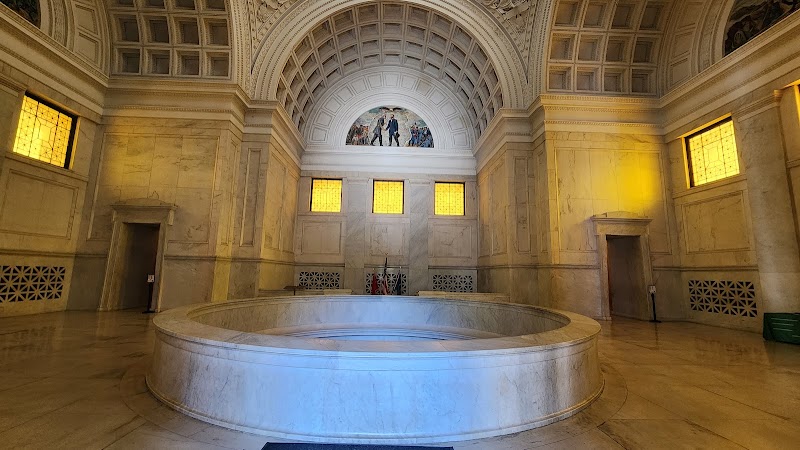
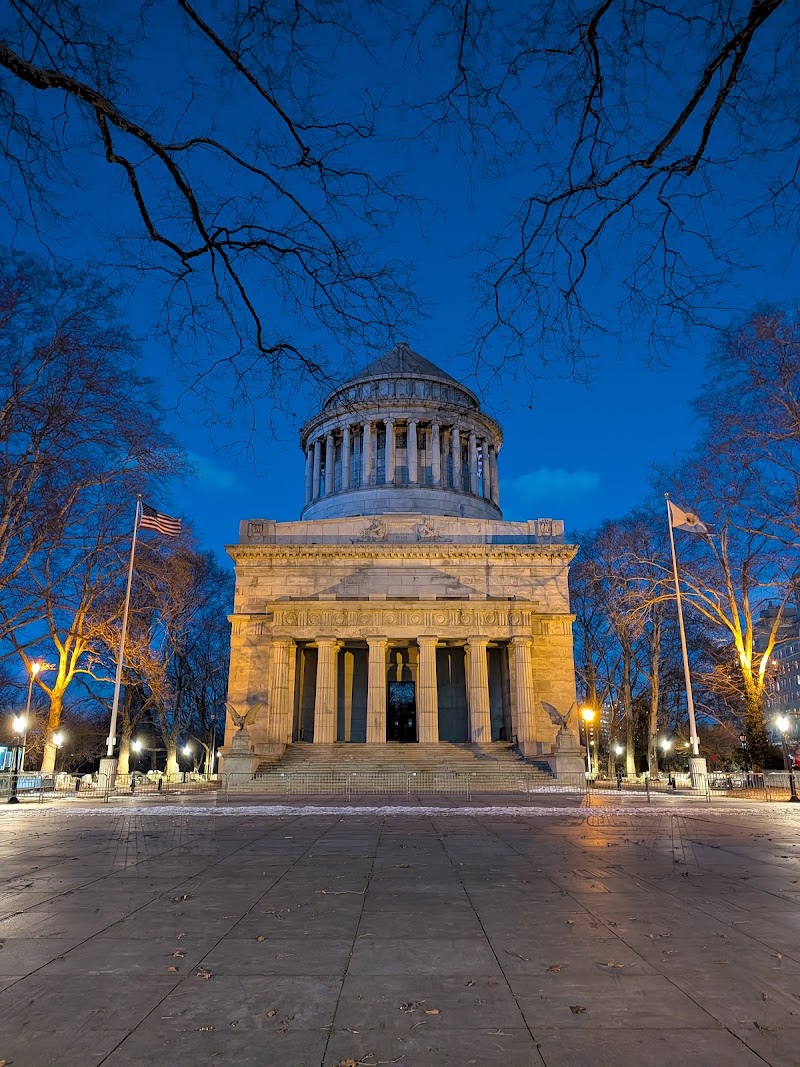
- Grant’s Tomb — formally the General Grant National Memorial, the largest mausoleum in North America. Ulysses S. Grant died of throat cancer on 23 July 1885; the cornerstone was laid on 27 April 1892 and the granite memorial, designed by John H. Duncan, was dedicated on 27 April 1897, which would have been Grant’s seventy-fifth birthday. It was paid for by more than 90,000 individual donors in what was then the largest public fundraising campaign in the world, and its dedication parade drew an estimated one million spectators. Grant and Julia Dent Grant lie in red granite sarcophagi in the crypt.
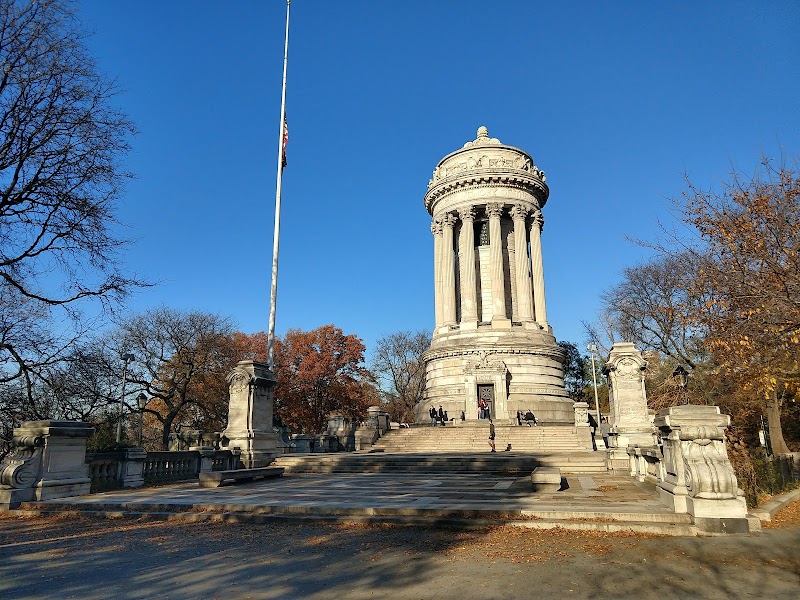
- Soldiers’ and Sailors’ Monument — a white marble rotunda of twelve Corinthian columns modelled on the Choragic Monument of Lysicrates in Athens, designed by the brothers Charles and Arthur Stoughton with carving by Paul E. M. DuBoy, and dedicated on Memorial Day 1902 in honour of the Union soldiers and sailors of the Civil War. It stands on a terrace above the river and remains the setting for the city’s Memorial Day observances.
- The 79th Street Boat Basin and Rotunda — built as part of Moses’s West Side Improvement and completed in 1937, with structures by Clinton Lloyd and landscape by Gilmore D. Clarke. The rotunda’s vaulted arcade of Guastavino tilework is one of the most beautiful pieces of civic architecture in the park; the marina below was the only facility in New York permitting year-round residency aboard boats. It closed for full reconstruction in 2021 and is being rebuilt.
- Cherry Walk — the riverside path through the northern half of the park, planted with the descendants of cherry trees given to New York by the city’s Japanese community in 1909. The paved walk opened in 2001, completing a critical missing link in the Hudson River Greenway, and was rebuilt in 2025 with a separated pedestrian lane and a two-way cycle track.
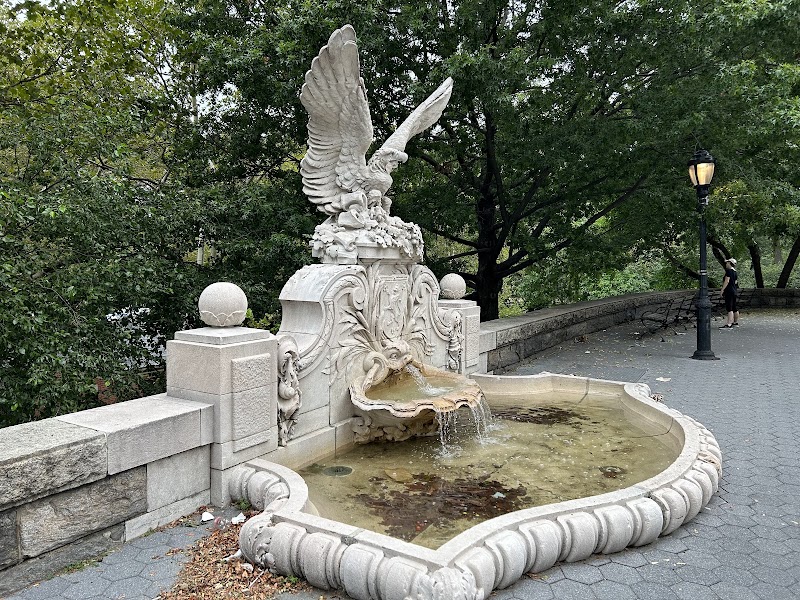
- The Firemen’s Memorial — a 1913 Knoxville marble monument by H. Van Buren Magonigle with sculpture by Attilio Piccirilli, carrying a bas-relief of a horse-drawn engine racing to a fire and flanked by allegorical groups titled Duty and Sacrifice. It remains an active memorial site for the New York City Fire Department.
- The Joan of Arc Memorial — Anna Hyatt Huntington’s equestrian bronze, unveiled on 6 December 1915: the first public monument in New York City by a woman sculptor and the first in the city to honour a real historical woman rather than an allegory. John Van Pelt’s granite pedestal incorporates stones taken from the cathedral at Reims, where Charles VII was crowned.
What you’ll find
The park works on three levels stacked against the bluff: the upper promenade along the drive, the wooded middle slope with its lawns and monuments, and the waterfront esplanade at river level. Almost everything of interest sits at a transition between them, and stairways connect the three at frequent intervals.
- The Hudson River Greenway — the continuous waterfront path through the park is part of the busiest bicycle route in the United States, running unbroken along the river with no traffic to cross.
- The Amiable Child Monument — a small urn and railing marking the grave of St. Claire Pollock, a boy who died on 15 July 1797 in the fifth year of his life, and one of the very few private graves on public land anywhere in New York City. It sits within sight of Grant’s Tomb, a striking pairing of the grandest and the smallest memorials in the park.
- Playgrounds and sports — a chain of playgrounds down the length of the park, including the well-known dinosaur-themed one, plus ball fields, basketball and handball courts, a skate park, and a set of red clay tennis courts that are a genuine rarity in the city.
- Gardens and volunteer plantings — perennial borders maintained by neighbourhood volunteers along the upper promenade, the best known of which appears in the closing scene of the film “You’ve Got Mail”.
- The bird sanctuary — a designated woodland refuge in the park’s northern half where well over 170 species have been recorded, benefiting from the river as a migration corridor.
- The Eleanor Roosevelt Monument — Penelope Jencks’s larger-than-life bronze of 1996, showing Roosevelt leaning thoughtfully against a rock rather than posed in triumph, at the park’s southern entrance.
Things to do — and who it’s for
- Runners and cyclists — the riverside path is flat, uninterrupted and four miles long inside the park alone, linking north to the George Washington Bridge and south to the Battery without a single road crossing.
- History travellers — Grant’s Tomb, the Soldiers’ and Sailors’ Monument and the Firemen’s Memorial form an unusually dense concentration of nineteenth and early twentieth-century civic monuments within a short walk.
- Families — the playground chain, the ball fields and the wide lower lawns give children space that Central Park’s crowded south end simply cannot, and the neighbourhood feel is markedly calmer.
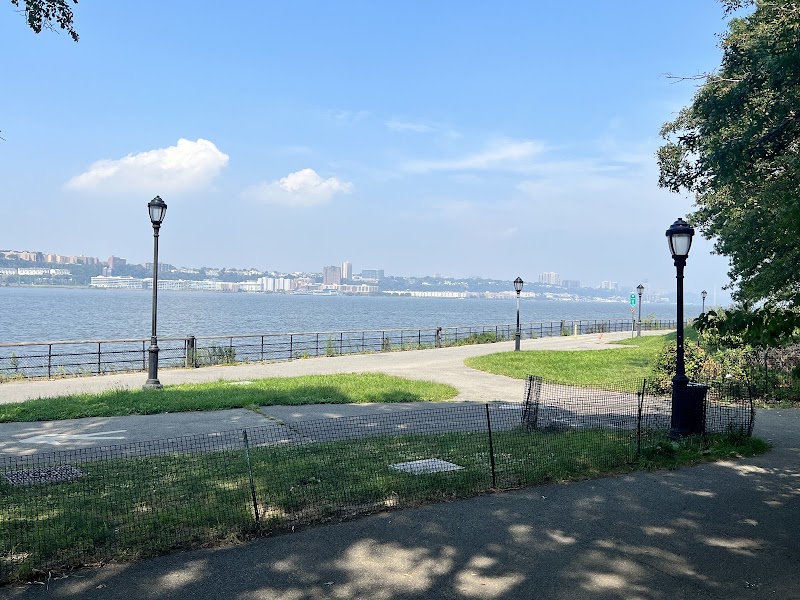
- Photographers and sunset watchers — the park faces due west across the river to the New Jersey Palisades, which makes it the best place in Manhattan to watch the sun go down over open water.
- Birdwatchers — the wooded slopes and the northern sanctuary catch migrants moving along the Hudson corridor in spring and autumn, with far fewer people than the Ramble.
- Locals and long walkers — the full length, from the southern entrance to the northern end, is a genuinely satisfying two-hour walk that passes through four distinct neighbourhoods.
Getting there & practical
Riverside Park runs along the western edge of the Upper West Side, Morningside Heights and Hamilton Heights, facing the Hudson with the New Jersey Palisades opposite. The 1 line shadows the park for its entire length, with stations a few minutes’ walk inland from every major entrance, including the Columbia University stop for Grant’s Tomb and the Soldiers’ and Sailors’ Monument. The 2 and 3 lines serve the express stations on the Upper West Side, and the M5 bus runs along the park’s upper rim. Entry to the park is free at every point and there are no gates; Grant’s Tomb is a National Park Service site and free to enter during its opening hours, while boat services, sports permits and any ticketed events are handled separately. The park is open daily from early morning until late at night. Allow an hour for a stretch of the waterfront, half a day to walk the length with stops at the monuments. Note that the park is steep in places — the drop from the upper promenade to the river is significant, and step-free routes exist but are not at every entrance.
When to visit
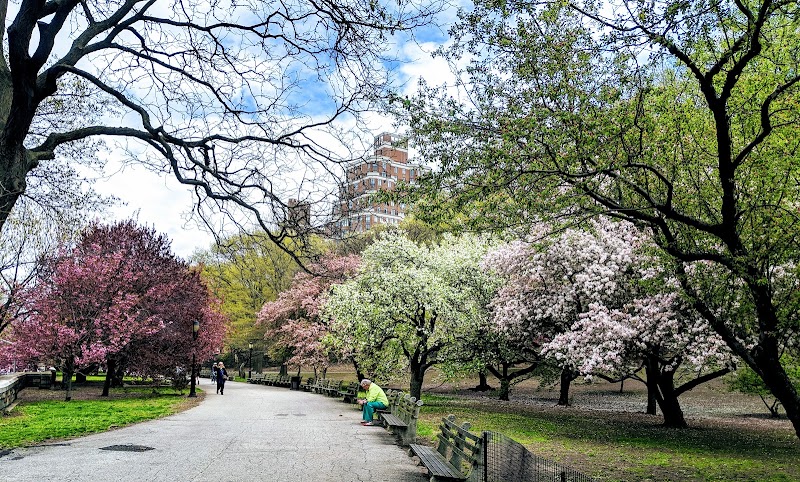
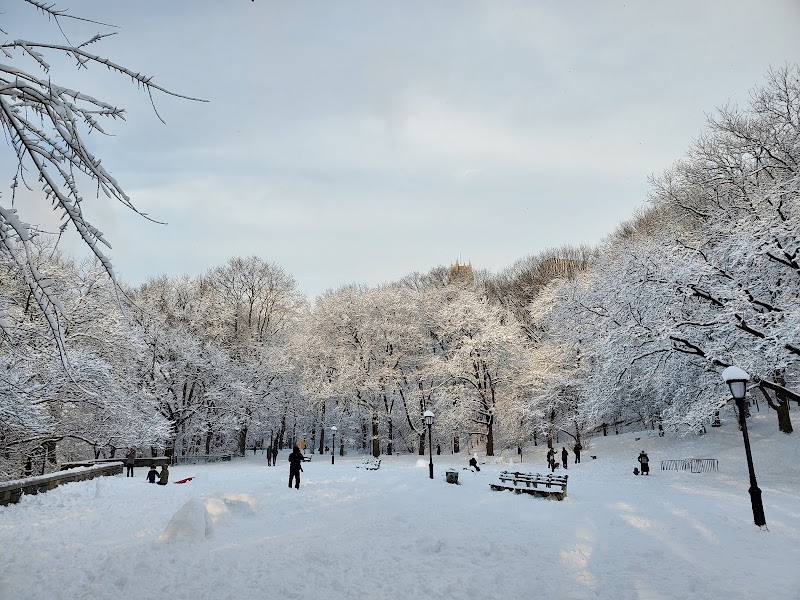
Spring brings the cherry blossom along the riverside walk and in the small park beside Grant’s Tomb, generally in the second half of April, along with the spring bird migration through the wooded slopes. Summer is when the lower park comes into its own: ball fields in constant use, the esplanade full of cyclists and runners, and a river breeze that makes it consistently more comfortable than the streets inland. Autumn turns the bluff and the wooded terraces gold and red through late October and November, and the low sun over the Palisades gives the park its best light of the year. Winter is stark and beautiful — bare trees, ice moving on the Hudson in a hard freeze, sledding on the slopes after snow, and long stretches of the waterfront path where you will meet almost nobody.
Good to know
The park was created in stages, and each stage answered a different problem. In the 1870s the city acquired the rocky bluff above the Hudson, and Frederick Law Olmsted produced a plan treating the carriage drive along the crest and the park below it as one continuous scenic landscape, curving the road to follow the natural contours rather than the street grid — a deliberate departure from the geometry of the rest of Manhattan. Calvert Vaux and the horticulturist Samuel Parsons Jr. developed the planting in the following decades. Grand monuments followed the arrival of wealth along the crest: the Soldiers’ and Sailors’ Monument in 1902, the Firemen’s Memorial in 1913, the Joan of Arc Memorial in 1915. Grant’s Tomb, dedicated in 1897, was the anchor of the whole composition, and in its first decades it drew more visitors annually than the Statue of Liberty. But the park had a fundamental defect: the New York Central Railroad’s freight line ran at grade along the waterfront, cutting the park off from the river with soot, noise and danger. The solution came in the 1930s with Robert Moses’s West Side Improvement, which covered the tracks with a deck, built the Henry Hudson Parkway alongside, and added roughly 132 acres of new parkland including the esplanade, the ball fields and the 79th Street Boat Basin with its Rotunda, completed in 1937. The trains still run, in a tunnel beneath the park’s northern reaches that later became known for the large-scale graffiti painted along it. The park was designated a New York City scenic landmark in 1980 and listed on the National Register of Historic Places in 1983. Like most of the city’s parks it fell into serious decline in the 1970s — Grant’s Tomb in particular became so neglected and vandalised that a campaign in the 1990s, driven substantially by a Columbia University student who documented its condition, forced a full restoration by the National Park Service, which has administered the memorial since 1959. The Riverside Park Conservancy, founded in 1986, has since worked alongside the city on restoration, horticulture and volunteer gardening, and the park’s waterfront role has grown steadily as the Hudson River Greenway has been completed link by link, with Cherry Walk opening in 2001 and being rebuilt in 2025.
Visitor tips
- Walk the upper promenade in one direction and the waterfront esplanade back — they are entirely different parks, and the stairways between the levels are frequent enough to switch whenever you like.
- Time a visit for the hour before sunset: the park faces west across open water to the Palisades, and there is no better free view of the sun going down anywhere on the island.
- Combine Grant’s Tomb with the Amiable Child Monument a short walk away — the contrast between the largest mausoleum on the continent and a single child’s grave from 1797 is the most memorable thing in the park.
Questions & answers
Is Riverside Park free? Yes, entirely, with no gates or tickets at any entrance. Grant’s Tomb, run by the National Park Service, is also free to enter during opening hours. Sports permits, boat services and occasional ticketed events are arranged separately.
Who is buried at Grant’s Tomb? President Ulysses S. Grant, commanding general of the Union Army and eighteenth president, who died on 23 July 1885, and his wife Julia Dent Grant, interred in 1898. Both lie in red granite sarcophagi in the crypt below the rotunda, which is why the old riddle about who is buried there has a slightly more complicated answer than people expect.
How long is the park and can I walk all of it? It runs four miles along the Hudson and covers 253 acres. Walking the full length takes roughly two hours at a steady pace, passing from the Upper West Side through Morningside Heights into Hamilton Heights, and the waterfront path continues beyond the park in both directions.
Can I still visit the 79th Street Boat Basin? The marina closed for full reconstruction in 2021 and remains a construction site, with reopening planned later this decade. The Rotunda above it, with its Guastavino tile vaulting, is the architectural draw and is worth seeing from the park side even while the basin is out of use.
When do the cherry trees bloom? Usually in the second half of April, though the exact window shifts by a week or two each year with the weather. The best displays are along the riverside walk in the northern half of the park and in the small formal park beside Grant’s Tomb.
Is it good for cycling? Yes — the waterfront path through the park forms part of the Hudson River Greenway, the busiest bicycle route in the United States, and runs flat and free of road crossings for the park’s entire length, connecting north towards the George Washington Bridge and south to the tip of Manhattan.
How does it compare to Central Park? It is far less crowded, considerably narrower, much steeper, and it has something Central Park does not: an open western horizon over the Hudson. Central Park is the destination; Riverside is the park New Yorkers on the west side actually use daily.
Photos
Show 1 more photos
Visitor reviews
Reviews last updated: 2026-08-04 20:06:37
Data is refreshed monthly. Sources: manhattanname.com and editorial picks based on reviews.
This is a small park for walking or exercising, with a playground for kids. There's a soccer field for kids' practice. There are also benches to sit and watch the river, a playground, or just to sit and rest.
A look at the waterfront park during a blizzard. Over 30 centimeters of snow fell, but plenty of people and dogs are enjoying the snowfall. During the blizzard there are lots of fallen trees, but they're well marked (as…
Riverside Park is an amazing setting for doing gymnastics, kicking a ball around on the soccer field, enjoying a meal at the café or people-watching. Personally, I love their calisthenics park, especially in the morning.…
This is one of many parks in New York where you can admire the beauty of an amazing sunset. Once you're in that wonderful spot, you'll be very glad you came. I've been there several times and even had a picnic.
A picturesque spot. Very calm and quiet. A view of the Hudson. I liked it.